The grammar of photo-engraving : containing instruction in drawing, chemistry and optics, as applied to photo-engraving, and a practical treatise on the art of half-tone, zinc etching, swelled gelatine, lithotype and chalk plate engraving, as practiced in the United States (1895)
Farquhar, H. D. (Harry D.), Eder, Josef Maria, 1855-1944 · London : Dawbard & Ward · leaf 57
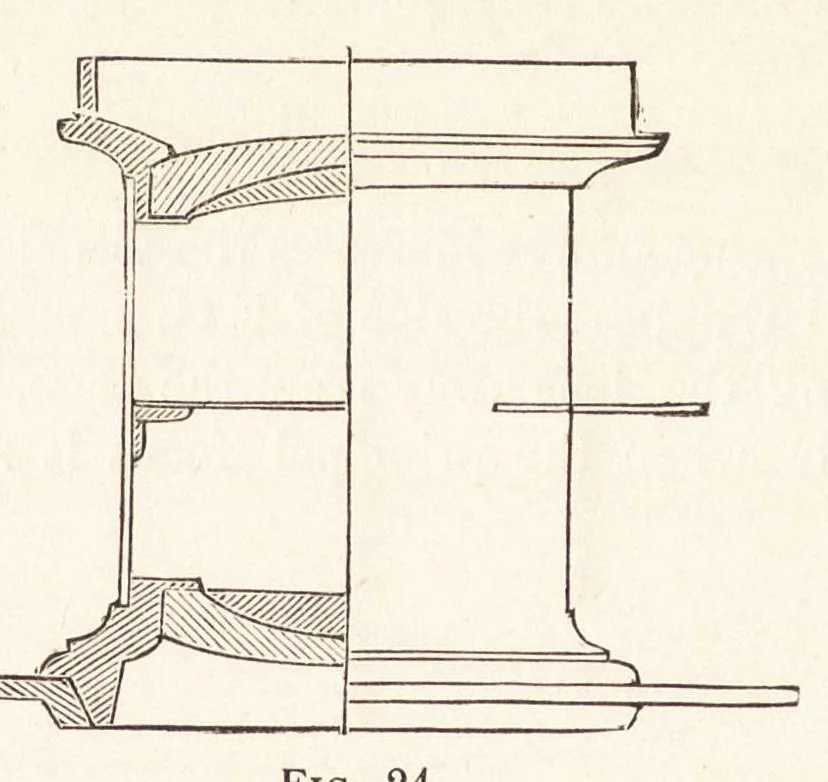
hat the rays from the candle strike the lens at different angles, some being refracted so much as to miss the eye. Those only that pass through the center of the lens, lead to the eye, it is the reason why the image is seen under a small angle. Spherical Aberation. Rays which pass through a lens… … Fig. 24 become sharp when a stop is inserted. This prevents certain rays from falling on the lens, or preventing the action o: such rays passing through marginal parts of the lens. The smaller the stop the sharper and the more distinct will be the image.
Photoengraving
Internet Archive · Getty Research Institute · Public domain (published before 1931). Free to use for anything.