A Guide to the mediaeval room and to the specimens of mediaeval and later times in the gold ornament room; (1907)
British Museum. Department of British and Mediaeval Antiquities and Ethnography, Dalton, O. M. (Ormonde Maddock), 1866-1945, Read, Charles Hercules, Sir, 1857-1929 · [London] Printed by order of the Trustees · leaf 86
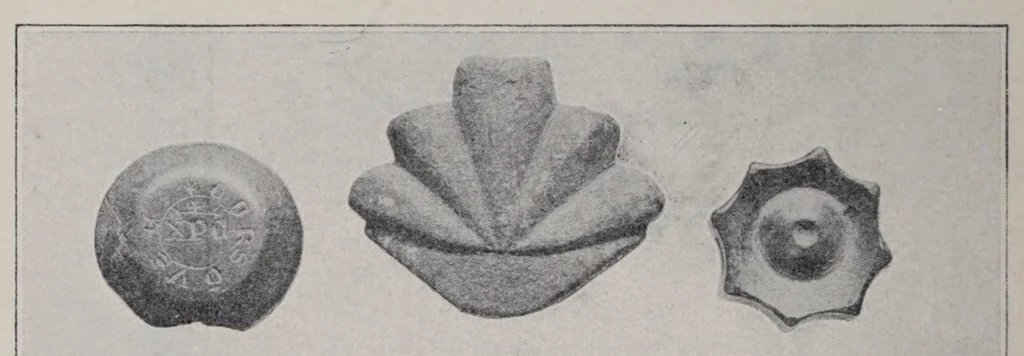
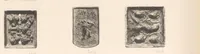
ned above. The Greeks wore bronze corslets, in two parts (back- and breast-plates) moulded to the shape of the body, greaves covering the lower 2:>art of the legs, and metal helmets. The Etruscans and the Eomans followed them in this, but the latter nation had also other varieties of body-armour,… … Fig. 5G. — Pommels of swords, twelfth to sixteenth centuries. Persians and their neighbours in Central Asia, and exemplified in remains found in Graeco-Scythian tombs in Southern Eussia as early as the fourth century b.c. Such armour was evidently of wide distribution in Inner Asia, and was made of…
Art objects · Art, Medieval
Internet Archive · Getty Research Institute · Public domain (published before 1931). Free to use for anything.