The history and principles of weaving by hand and by power : reprinted, with considerable additions, from "Engineering," with a chapter on lace-making machinery, reprinted from the "Journal of the Society of Arts" (1878)
Barlow, Alfred · London : S. Low, Marston, Searle, & Rivington ; Philadelphia : H. Carey Baird · leaf 283
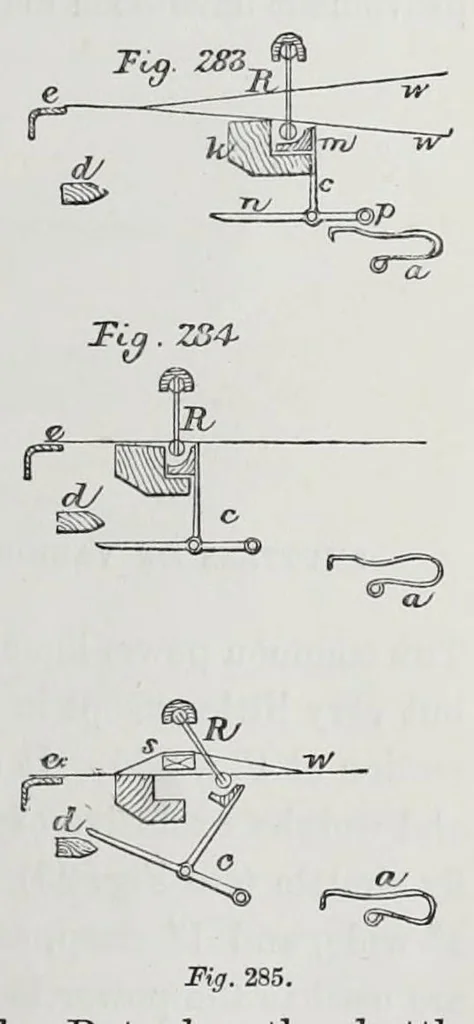
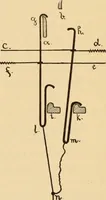
in Fig. 314, by means of which when the frog is driven back by the catch j, it strikes against the spring handle at m, and throws it out of the notch, and stops the loom. The loose reed was invented by Mr. Jas. BuUough, and patented in 1842. By means of this contrivance the reed is caused to give… … against the cloth from overcoming the reed. But when the shuttle is struck, as shown in Fig. 285, the reed gives way, and the catch n ascends above the wedge d, and it thereby assists the shuttle in throwing the reed back. This motion is not adapted to heavy cloths— but various modifica- tions of…
Weaving · Hand weaving · Lace and lace making
Internet Archive · Getty Research Institute · Public domain (published before 1931). Free to use for anything.