How to figure out and arrange pattern work for weaving colored fabrics, explained and illustrated, together with other simple rules and calculations pertaining to weaving departments (1915)
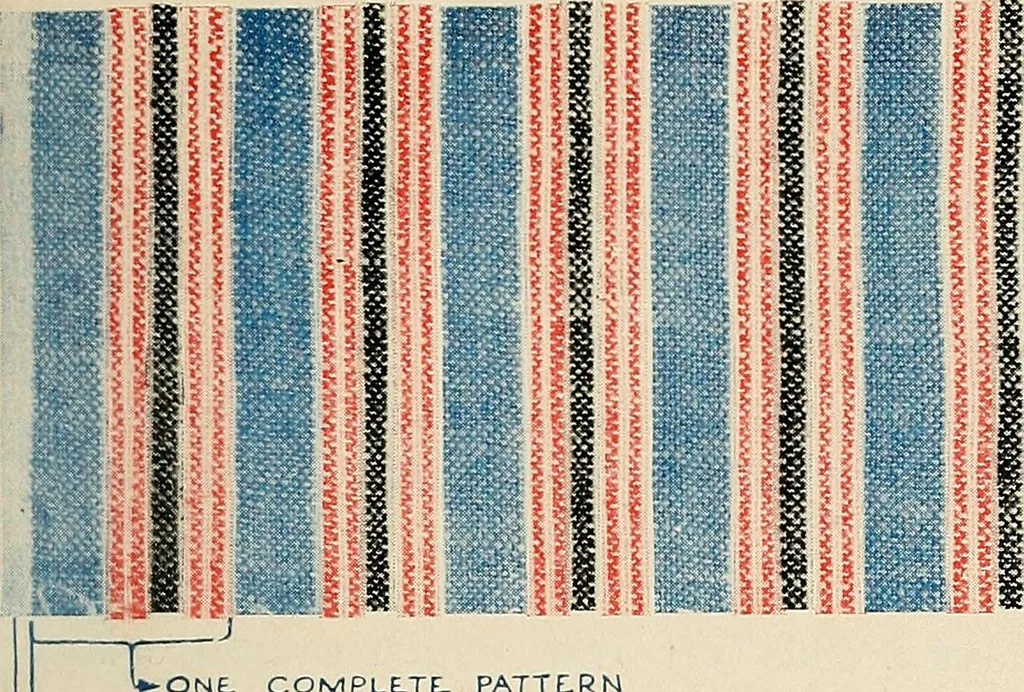
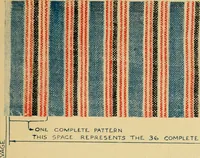
we have— 6 ends of red8 ends of white4 ends of black14 ends of blue 32 Now going back to page 21, where we got out our totalnumber of ends of each color, we find, by adding theabove to it, we have the following: 14 added to 504 gives us 518 ends of blue 8 added to 432 gives us 440 ends of white 6… … -ONE. COMPLE.TE- PATTERN THIS SPACE REPRESENTS THE 3<o COMPLETE PATTERNS CUT N2 7 1 u O a!. < UJ > :3 O LiJ to ui UQ t>0 IZ Q V~lJ z liJ {Ni fO vS The above cut would pass, of course, but it would not bearranged to best advantage. Therefore it should bearranged as follows, and then both…
Weaving
Internet Archive · Library of Congress · Public Domain Mark 1.0. Free to use for anything.