How to lay out a garden : intended as a general guide in choosing, forming, or improving an estate, (from a quarter of an acre to a hundred acres in extent) with reference to both design and execution (1860)
Kemp, Edward, 1817-1891 · New York : Wiley · leaf 197
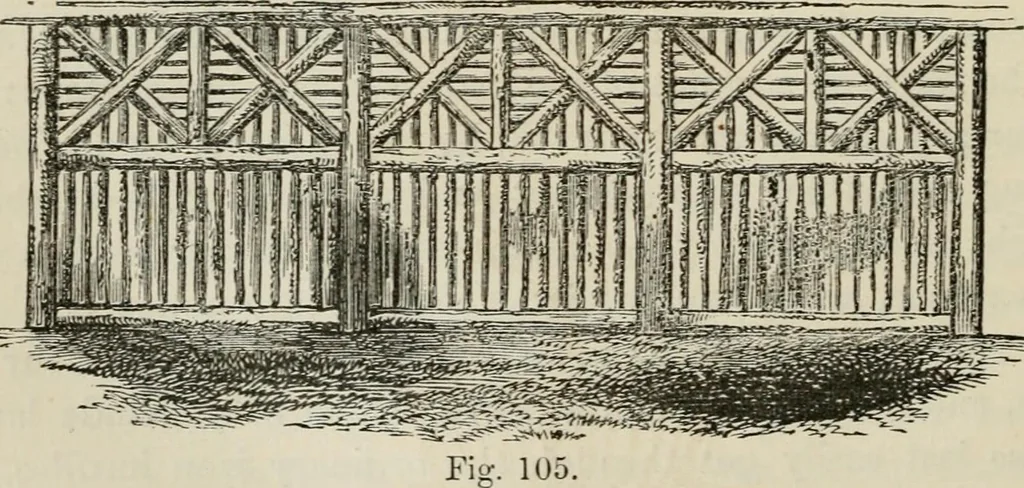
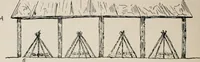
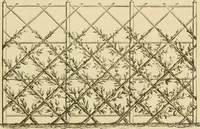
Fig. 104. outwards. It is formed of larch, oak, or hazel poles, about twoinches in thickness, with the bark left on, and may either befinished with or without a top rail. The latter is certainly animprovement, and consists of similar poles, sawn in half, andthe sawn side placed downwards. All the… … perhaps, be objection able, or too expensive, while hedges wouldeither be too long in growing, or the situation is so shaded thatno hedge could ever thrive in it. For such positions, the rusticclose fence, fig. 105, composed of larch poles with the bark on, FENCES. 161 and intended to be partially…
Landscape architecture
Internet Archive · Public Domain Mark 1.0. Free to use for anything.