An illustrated dictionary of words used in art and archaeology. Explaining terms frequently used in works on architecture, arms, bronzes, Christian art, colour, costume, decoration, devices, emblems, heraldry, lace, personal ornaments, pottery, painting, sculpture, &c, with their derivations (1883)
Mollett, John W. (John William) · London, Sampson Low, Marston, Searle, and Rivington · leaf 141
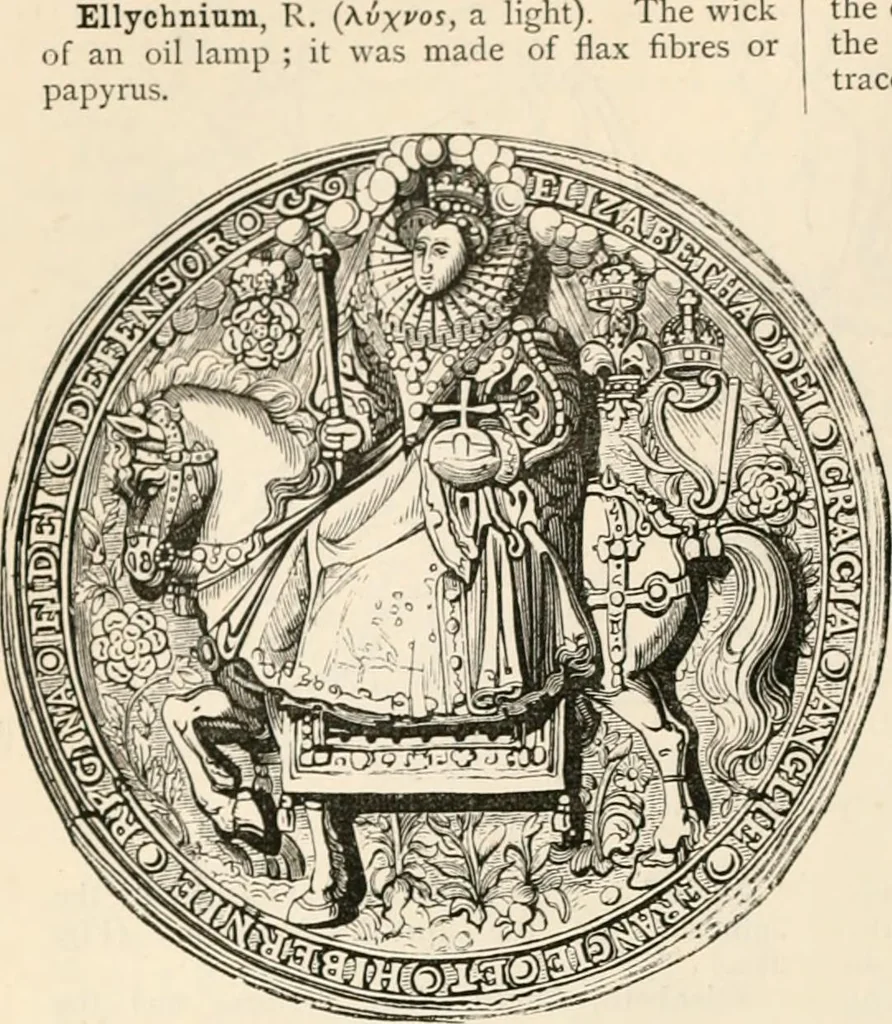
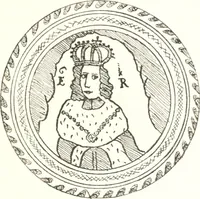
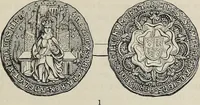
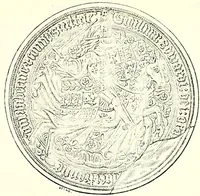
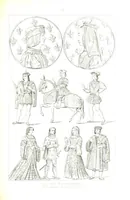
re a mixed revival of clas-sical forms with quaint and grotesque relicsof the Gothic. Typical examples areCrewe Hall, Speke, in Lancashire, HaddonHall, Kenihvorth Castle, Raglan Castle,\c. Ellipsis, Ellipse. A figure formed bycutting a cone obliquely across its length ;hence— Ellipsograph. An… … Fig. 2S4. Great Seal uf (Jueen Elizabeth. Emarginated. Having the margin brokenby a notcli or notches. Embalming was frequently practised by theearly ChrLstians, especially with the bodies ofmartyrs. The practice was derived from theJews. As a pagan ceremony embalming wasintended to facilitate…
Art · Archaeology -- Dictionaries
Internet Archive · California Digital Library · Public Domain Mark 1.0. Free to use for anything.