Introductory course of natural philosophy for the use of schools and academies. Ed. from Ganot's popular physics. By William G. Peck (1869)
Ganot, Adolphe, 1804-1887, Peck, William Guy, 1820-1892 · New York A.S. Barnes · leaf 30
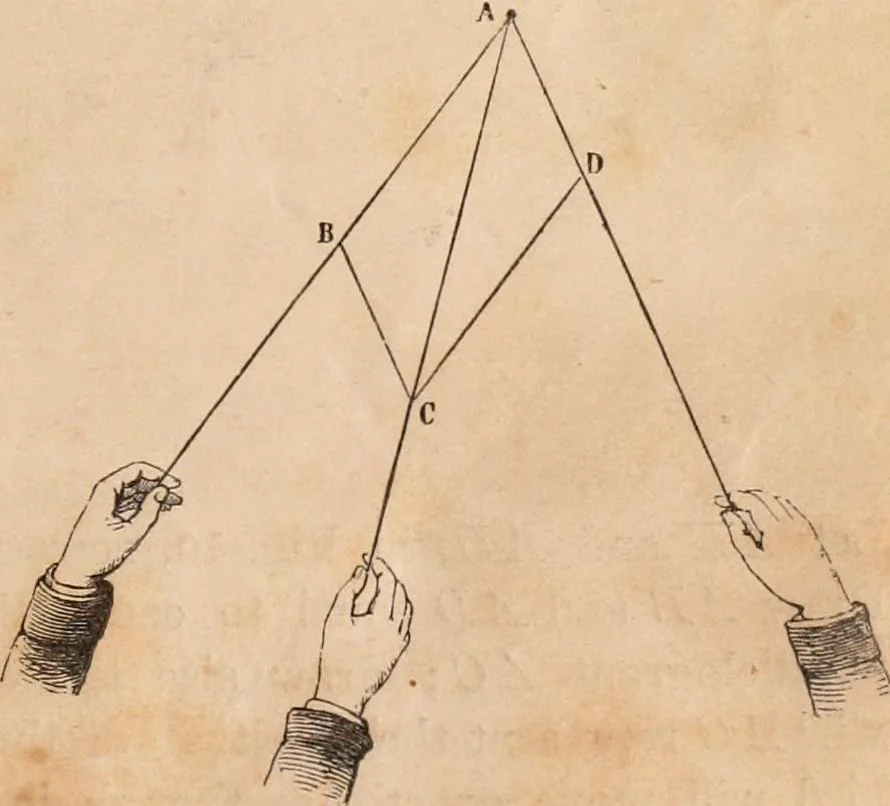
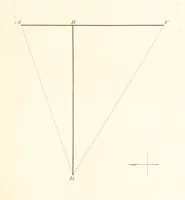
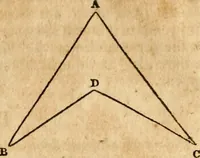
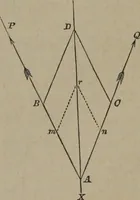
d in direc-tion and intensity by theadjacent sides of a par-allelogram, their result-ant icill be represented in direction and intensity by that diagonal which passesthrough their point-of intersection. This principle iscalled the Parallelo-gram of Forces. The operation offinding the result-ant… … What are Components? Illustrate. (22.) Enunciate the parallelogram of forces. 28 POPULAR PHYSICS. and AD to represent the force?1, and having completed theparallelogram, we draw its diagonal AC; this will be theirresultant, If the resultant A C is known, and the directionsof its components are…
Physics
Internet Archive · Gerstein Library, University of Toronto · Public Domain Mark 1.0. Free to use for anything.