Ball, W. W. Rouse (Walter William Rouse), 1850-1925 · London, Macmillan and Co., limited · leaf 224
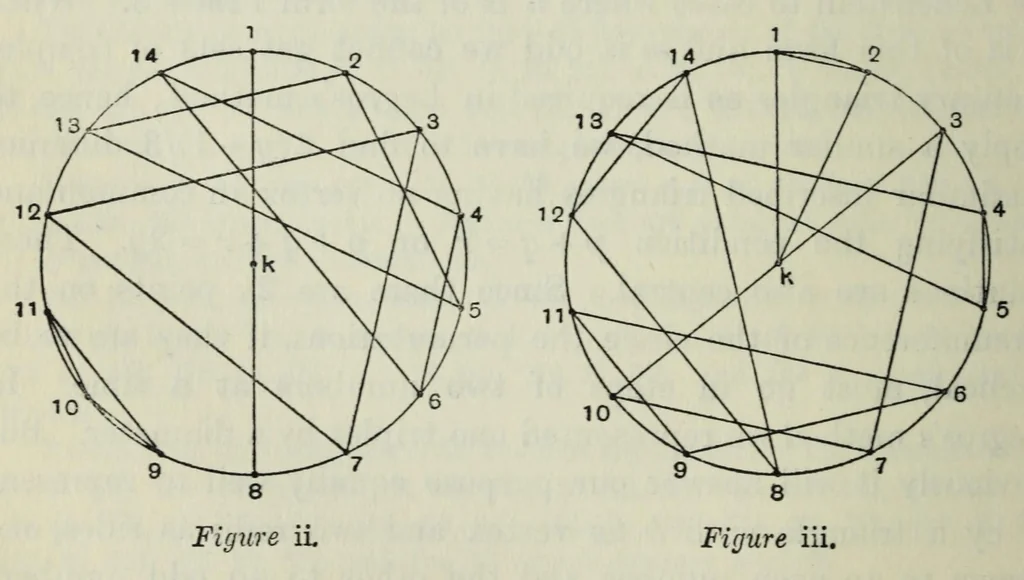
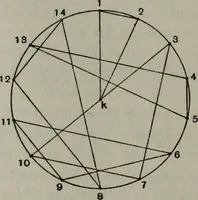
y of the values [1], [2], [3], [4], [5], [6], and each value must be used twice. On examination it will be found that there are only two possible groupings, namely [1, 1, 2], [2, 4, 6], [3, 3, 6], [5, 5, 4], and [1, 2, 3], [1, 4, 5], [3, 5, 6], [2, 4, 6]. One of the solutions to which the first set… … second set leads to solutions defined by the triplets (k. 1. 8), (4. 5. 7), (13. 14. 9), (3. 6. 11), (10. 12. 2), or by the triplets (k. 1. 8), (6. 7. 9), (3. 4. 13), (5. 11. 14), (10. 12. 2): in these solutions all the triangles used are scalene. If any one of these three sets of triplets is…
Geometry · Astrology · Space and time · Matter · Magic squares · Mathematical recreations
Internet Archive · University of Illinois Urbana-Champaign · Public domain (published before 1931). Free to use for anything.
![An illustration from Vnderweysung der Messung : mit dem Zirkel vn[d] Richtscheyt in Linien, Ebnen vnnd gantzen Corporen (1525)](https://img.insideoutlibrary.com/img/200/ia-vnderweysungderm00drer-56-108.webp)