Mechanical movements, powers and devices; a treatise describing mechanical movements and devices used in constructive and operative machinery and the mechanical arts, being practically a mechanical dictionary, commencing with a rudimentary description of the early known mechanical powers and detailing the various motions, appliances and inventions used in the mechanical arts to the present time, including a chapter on straight line movements, by Gardner D. Hiscox (1914)
Hiscox, Gardner Dexter, 1822?-1908 · New York, The Norman W. Henley publishing co. · leaf 142
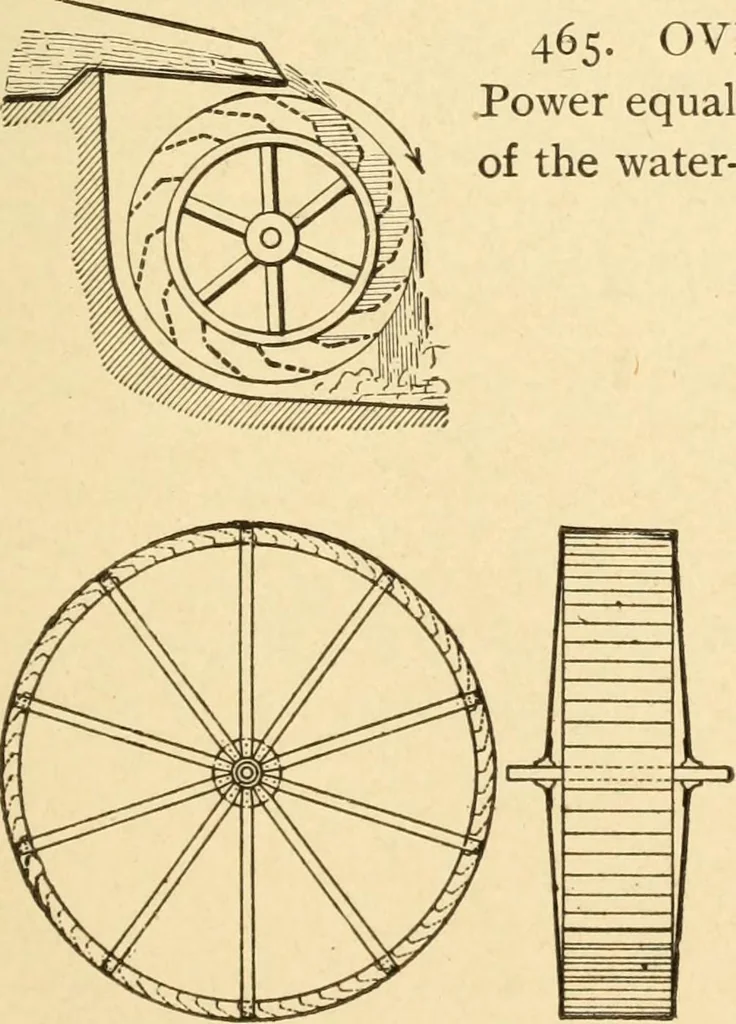
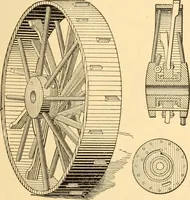
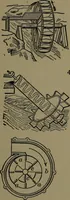
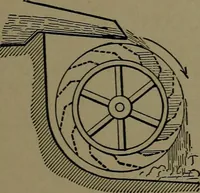
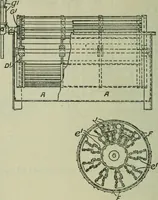
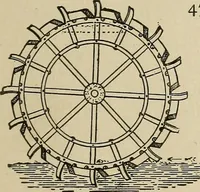
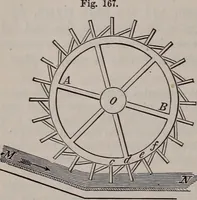
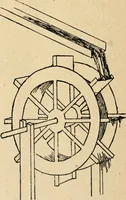
OVERSHOT WATEP. WHEEL, withsteel buckets. Witli the gate chute im-pinging upon the buckets an efficiency offrom seventy to seventy-five per cent, maybe obtained. h X w X .70 = horse-power. 33,000 h, Total height of water-fall from race; w,weight of water falling per minute. … 465. OVERSHOT WATER WHEEL—Power equals about sixty per cent, of the valueof the water-fall flowing over the wheel. 466. IRON OVERSHOTWHEEL.—The frame and buck-ets are made of iron or steel.The lightest wheel of its kind. Leffel model. 467. Front view. 132 HYDRAULIC POWER AND DEVICES.
Mechanical movements
Internet Archive · Library of Congress · Public Domain Mark 1.0. Free to use for anything.