Mechanical movements, powers and devices; a treatise describing mechanical movements and devices used in constructive and operative machinery and the mechanical arts, being practically a mechanical dictionary, commencing with a rudimentary description of the early known mechanical powers and detailing the various motions, appliances and inventions used in the mechanical arts to the present time, including a chapter on straight line movements, by Gardner D. Hiscox (1914)
Hiscox, Gardner Dexter, 1822?-1908 · New York, The Norman W. Henley publishing co. · leaf 181
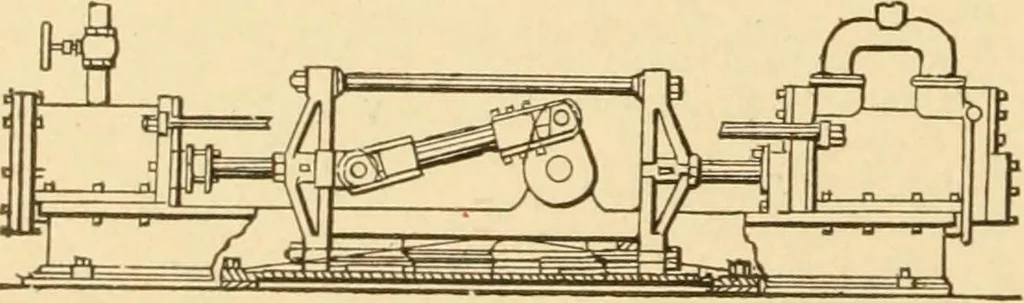
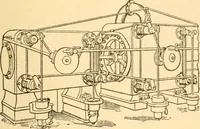
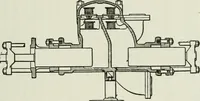
injected into the cylinderto cool the air, the excess beingdischarged through the air valves.An early type. 634. TROMPE OR HYDRAULICAIR BLAST.—One of the early devicesfor furnishing an air blast to a forge.The falling column of water draws in airthrough the small inclined orifices at ^,carrying it… … 635. AIR COMPRES-SOR.— Elevation of duplextype, showing connectingrod and yoke frame. Clayton^ model. AIR POWER APPLIANCES. 171
Mechanical movements
Internet Archive · Library of Congress · Public Domain Mark 1.0. Free to use for anything.