Mechanical movements, powers and devices; a treatise describing mechanical movements and devices used in constructive and operative machinery and the mechanical arts, being practically a mechanical dictionary, commencing with a rudimentary description of the early known mechanical powers and detailing the various motions, appliances and inventions used in the mechanical arts to the present time, including a chapter on straight line movements, by Gardner D. Hiscox (1914)
Hiscox, Gardner Dexter, 1822?-1908 · New York, The Norman W. Henley publishing co. · leaf 200
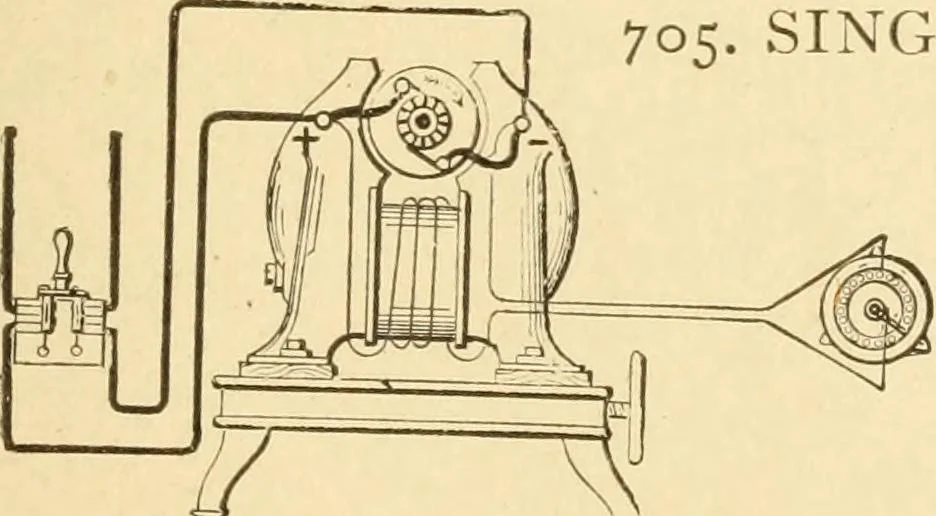
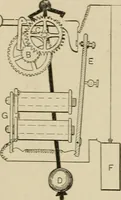
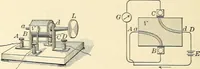
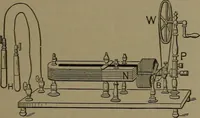
704. ELECTRIC GENERATOR CONSTRUC-TION.—Series winding in which the armature, fieldwinding, and external circuit are in series or one contin-uous line. Best for arc lighting. A, armature; C, com-mutator ; b and h brushes; the coil showing the fieldwinding. … 05. SINGLE-POLE SHUNT GENERATOR,showing the shunt-winding connec-tion with the brushes and branchwiring to a rheostat controller. Theheavy lines are the main currentwith a switch.
Mechanical movements
Internet Archive · Library of Congress · Public Domain Mark 1.0. Free to use for anything.