Mechanical movements, powers and devices; a treatise describing mechanical movements and devices used in constructive and operative machinery and the mechanical arts, being practically a mechanical dictionary, commencing with a rudimentary description of the early known mechanical powers and detailing the various motions, appliances and inventions used in the mechanical arts to the present time, including a chapter on straight line movements, by Gardner D. Hiscox (1914)
Hiscox, Gardner Dexter, 1822?-1908 · New York, The Norman W. Henley publishing co. · leaf 207
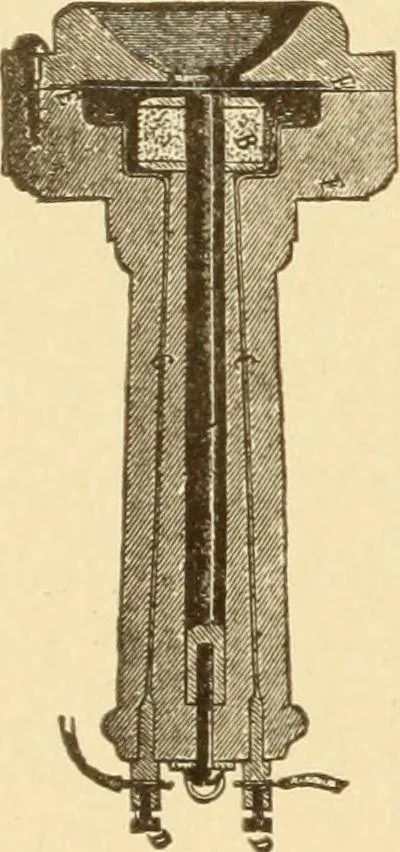
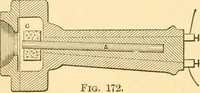
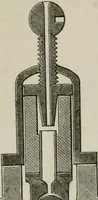
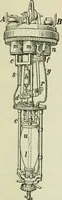
735. TELEPHONE TRANS-MITTER.—A, A, thin irondiaphragm ; B, india rubber in con-tact with diaphragm and the ivorydisc, C ; D, platinum foil betweenthe ivory disc, C, and the carbon disc,E; G, disc and screw for adjust-ment of carbon contact; H, ad-justing screw for diaphragm con-tact. … 736. TELEPHONE RECEIVER.—A centralmagnet, with a coil of fine insulated wire around theend, next the vibrating plate or diaphragm. Thevariations in the electrical current produce varia-tions in the intensity of the magnet, which set upvibrations of sound in the iron diaphragm.
Mechanical movements
Internet Archive · Library of Congress · Public Domain Mark 1.0. Free to use for anything.