Mechanical movements, powers and devices; a treatise describing mechanical movements and devices used in constructive and operative machinery and the mechanical arts, being practically a mechanical dictionary, commencing with a rudimentary description of the early known mechanical powers and detailing the various motions, appliances and inventions used in the mechanical arts to the present time, including a chapter on straight line movements, by Gardner D. Hiscox (1914)
Hiscox, Gardner Dexter, 1822?-1908 · New York, The Norman W. Henley publishing co. · leaf 303
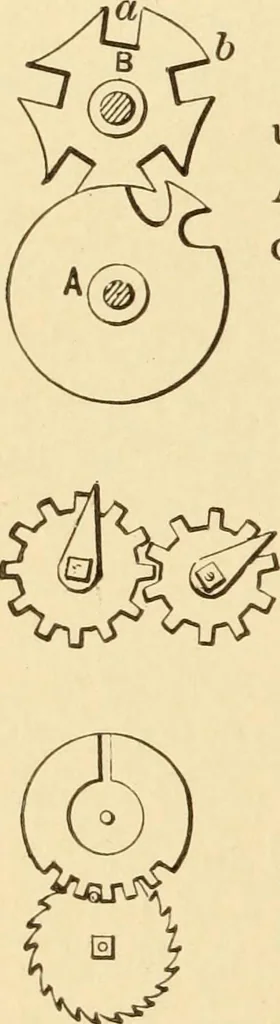
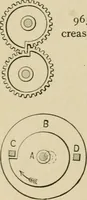
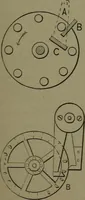
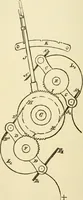
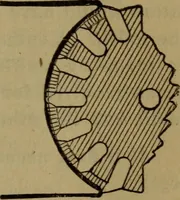
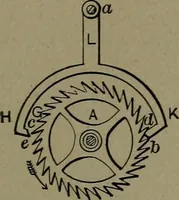
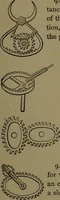
s. This device compensates forthe variation in the force of the spring. 292 HOROLOGICAL. 1188. CHRONOMETER ESCAPEMENT.— P, the impulse pallet on the arbor disc of thebalance wheel; V, a release tooth on the arborwhich strikes the end of the stop lever and releasesthe escapement at the moment that… … 1189. GENEVA STOP. —A winding-up stopused on watches. Winds as many turns of the wheelA as there are notches in wheel B, less one. Thecurve a b is the stop. 1190. GEARED WATCH STOP.-the two arms makes the stop. Contact of 1191. WATCH STOP.—The number of turns of theratchet pinion is limited by the…
Mechanical movements
Internet Archive · Library of Congress · Public Domain Mark 1.0. Free to use for anything.