Mechanical movements, powers and devices; a treatise describing mechanical movements and devices used in constructive and operative machinery and the mechanical arts, being practically a mechanical dictionary, commencing with a rudimentary description of the early known mechanical powers and detailing the various motions, appliances and inventions used in the mechanical arts to the present time, including a chapter on straight line movements, by Gardner D. Hiscox (1914)
Hiscox, Gardner Dexter, 1822?-1908 · New York, The Norman W. Henley publishing co. · leaf 341
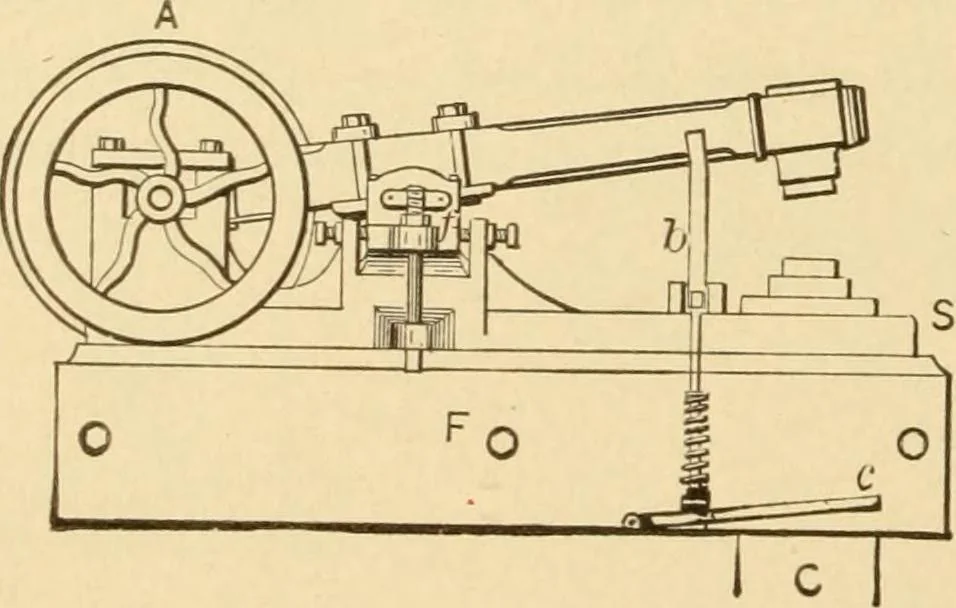
. 1362. BLACKSMITHS HELPER, or foot helve hammer. Operated by the footon the treadle. Hammer held up by thespring. 1363. REVOLVING RAPID-BLOW HAM-MER.—The centrifugal action of the revolvingarms throws the hammers outward. … 1364. HELVE TRIP HAM-MER.—An ancient device yet inuse. The treadle stops the actionof the hammei by disengaging thebell-crank catch h. Used for smallwork« MILL AND FACTORY APPLIANCES. 33^
Mechanical movements
Internet Archive · Library of Congress · Public Domain Mark 1.0. Free to use for anything.