New Physiognomy : or signs of character, as manifested through temperament and external forms, and especially in the "the human face divine." (1889)
Wells, Samuel R. (Samuel Roberts), 1820-1875 · New York : Fowler & Wells · leaf 153
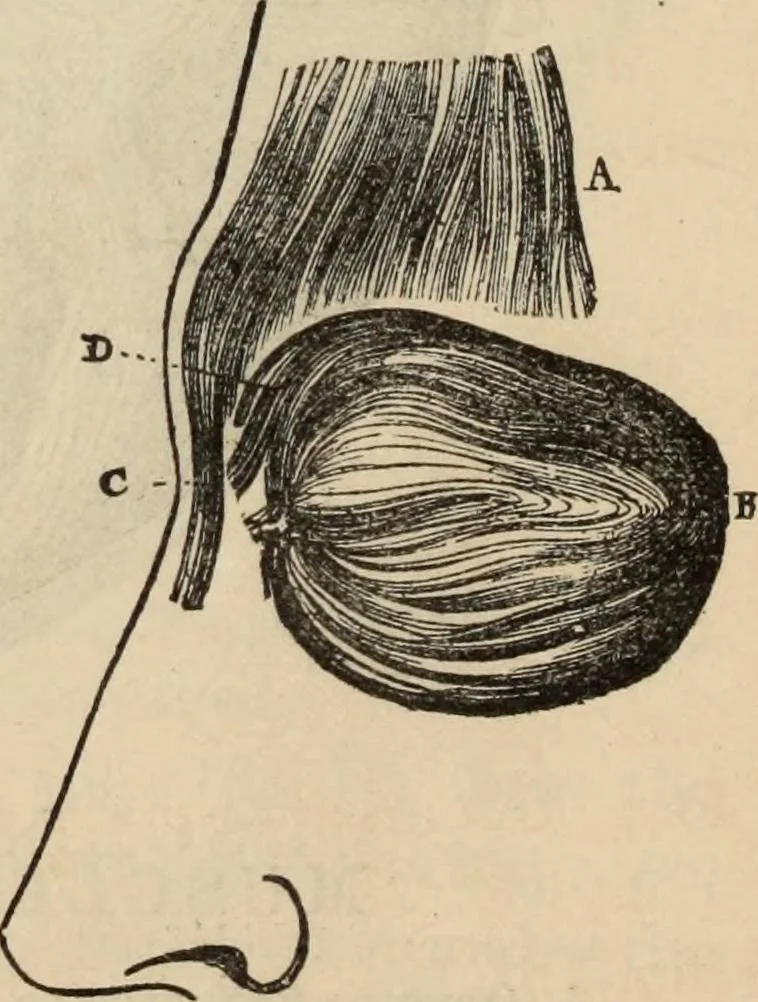
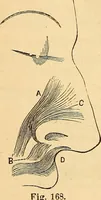
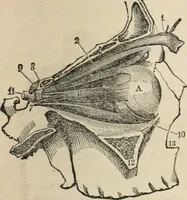
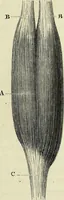
Eyebrow.— Theforehead, Sir Charles Bell says, ismore than any other part character-istic of the human countenance. Itis the seat of thought, a tablet whereevery emotion is distinctly impress-ed ; and the eyebrow is the movabletype for this fair page. Pliny says:Frons hominis tristitice,… … Fig. IGG. MtrSCLES OF THE EtEBROW. MUbCLES OF THE EYE 147 1. The Occipito frontalis (fiir. IOC, A) arises in a web offibers from the back of tlie skull, descends over the forehead,and is inserted into the eyebrow, wheie it mingles its hberswith those of the orbicularis palpebrarinn. Its action is…
Physiognomy · Phrenology
Internet Archive · Public Domain Mark 1.0. Free to use for anything.
![An illustration from The confessional ... An analysis of the causes and cure of melancholy, nervousness, mental and physical debility, arising from ill health, worldly anxiety ... To which is added an essay on corpulency-obesity ... A sketch of choice in marriage, phrenologically considered ... and a few comments on drunkenness / [Robert James Culverwell]. (1841)](https://img.insideoutlibrary.com/img/200/wellcome-wellcome_b30377833-73-1.webp)