Ophthalmic lenses, dioptric formulae for combined cylindrical lenses : the prism-dioptry, and other optical papers (1900)
Prentice, Charles Frederick, b. 1854 · Philadelphia : Keystone · leaf 26
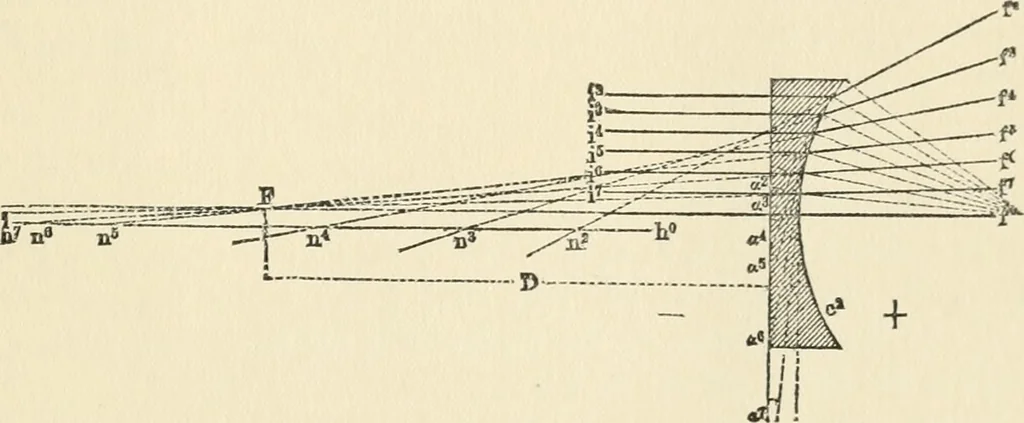
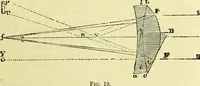
^, n^, toward the lens, correspond to the more eccentric in-cident rays, and, in the sense that these fail to assist in the harmony of aunion of the final rays at the focal point, are to be considered a disturbingelement, giving issue to what is termed aberration. In the plano-concavelens, Fig. 9,… … Fig. 9.Plano-concave section. § 11. For either of the above lenses it is also obvious that the more acutethe curvature of the circle, the greater proportionately will be the anglesa^, a^, a*, limiting the obliquity of the surfaces, and the closer to the lenswill be the focal point F. Further, as…
Lenses
Internet Archive · California Digital Library · Public Domain Mark 1.0. Free to use for anything.