List, C, Hall, T. G. (Thomas Grainger), 1803-1881 · Philadelphia : Thomas Cowperthwait & Co. and Carey & Hart · leaf 76
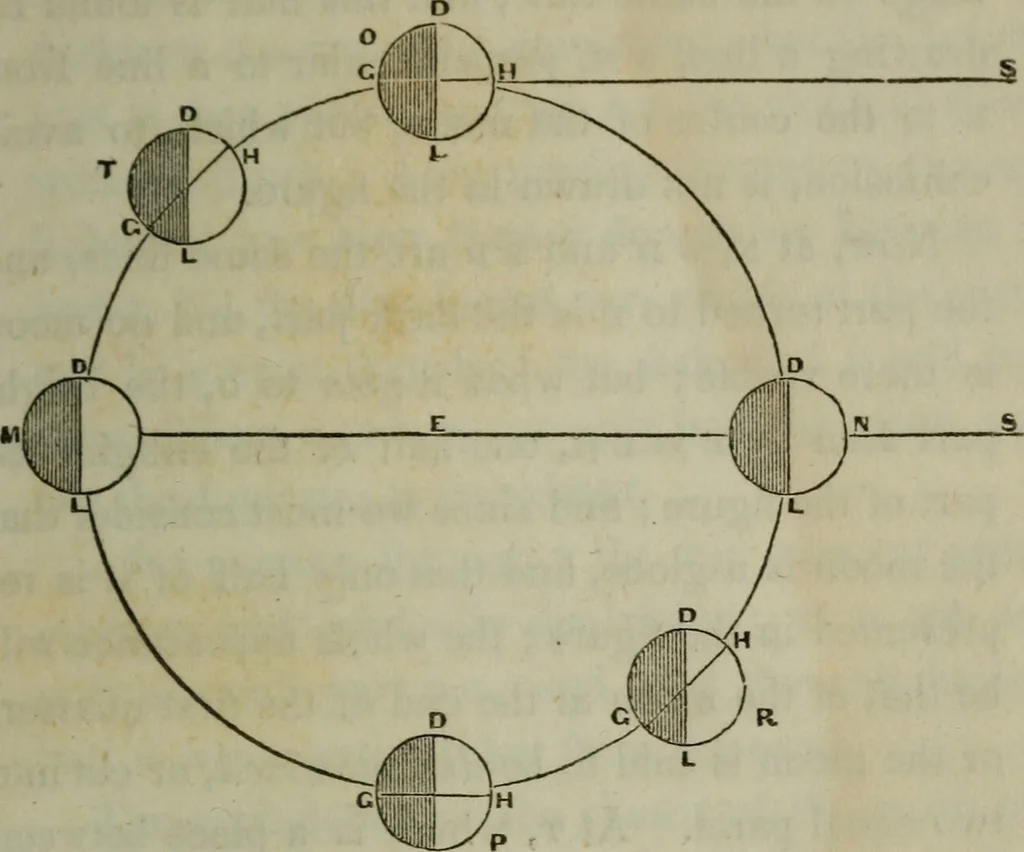
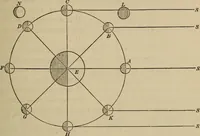
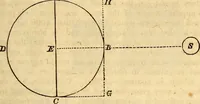
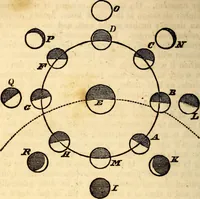
hes by the same degreesas it increased, till it entirely disappears. The crescent of the moon is always turned tothe sun, and it evidently shows that it shines withlight borrowed from the sun. The causes of these phases may be explained,although imperfectly, by a figure: a more com-plete… … Let e be the earth, m, n, o, the orbit of the moonround it, and m, n, o, three positions of the moon,s n, and s h, rays proceeding from the sun, whichare drawn in the same direction (i. e. parallel),because the sun is so very distant. Now one-half of the moon, viz. that which isturned towards the…
Astronomy
Internet Archive · Library of Congress · Public Domain Mark 1.0. Free to use for anything.