Nystrom, John W. (John William), 1824-1885 · Philadelphia, J.B. Lippincott · leaf 162
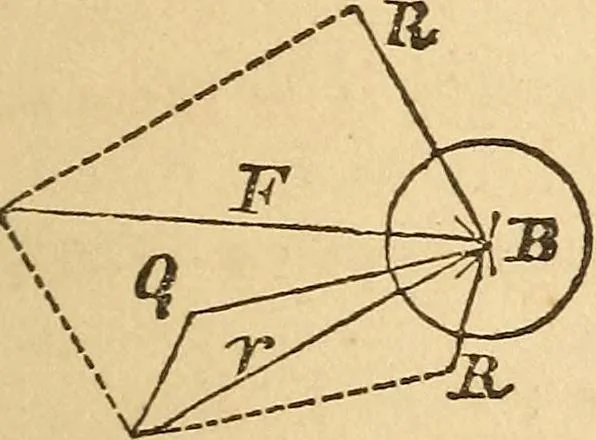
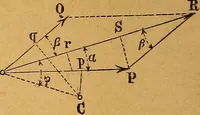
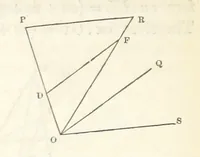
165. Let P and Q represent the magnitudes and direc-tions of two forces which act to move the body B.By completing the parallelogram, there will be ob-tained a diagonal force F, whose magnitude and di-rection is equal to the sum P and Q. J7* is calledthe resultant of P and Q. … 166. If three or more forces act in different directionsto move a body J5, find the resultant of any two ofthem, and consider it as a single force. Betweenthis and the next force find a second resultant,thus: P. Q, and Pare magnitudes and directions ofthe.forces. P+Q = r, r+R = F== P+Q+R, or Fis…
Mechanical engineering · Engineering
Internet Archive · Library of Congress · Public Domain Mark 1.0. Free to use for anything.