Principles of modern geometry, with numerious applications to plane and spherical figures; and an appendix, containing questions for exercise. Intended chiefly for the use of junior students (1862)
Mulcahy, John, 1810?-1853 · Dublin Hodges, Smith · leaf 47
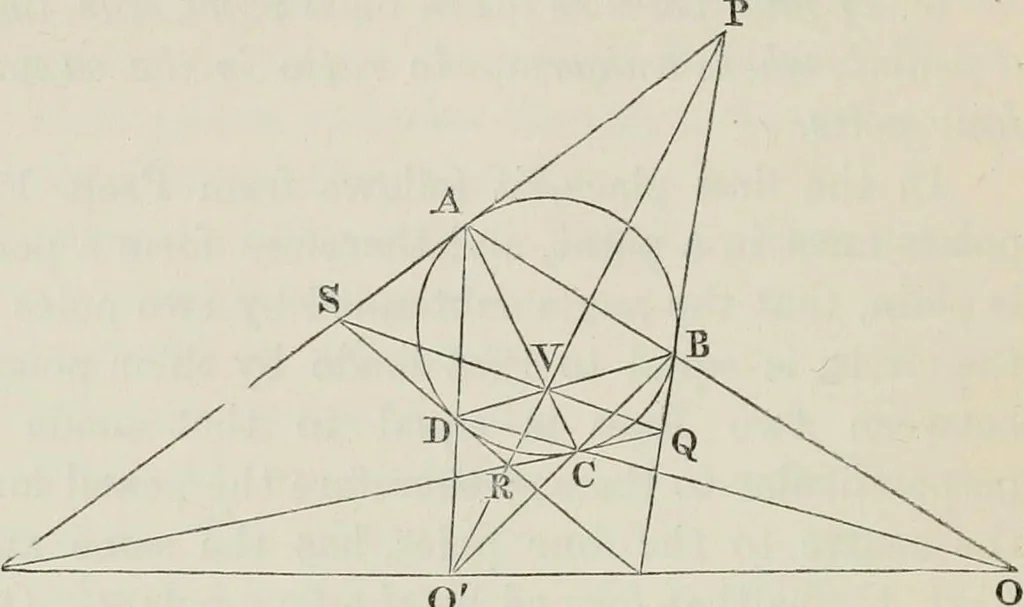
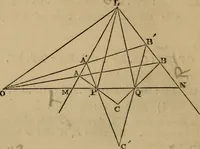
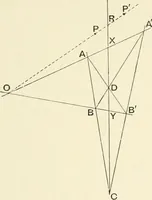
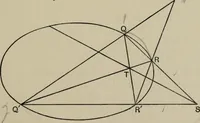
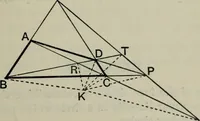
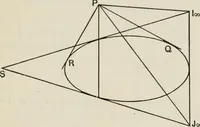
umscribed to a circle, and aninscribed quadrilateral be formed by joining the successive pointsof contact, the diagonals of the two quadrilaterals intersect in * This Proposition, expressed trigonometrically (see Note on Art. 26), gives thefollowing equation: sin ^AD . sin fBC sin |AD. sin ^BCsin… … the same point, and form an harmonic pencil; and the third di-agonals of the two quadrilaterals are coincident. Let PQRS be the circumscribed quadrilateral, and ABCDthe inscribed(see fig.;) andlet AB andCD meet inO. Then, asAB and CDare (Art. 38)the polars ofP and R, thepoint O is the pole of the o…
Geometry -- Problems, exercises, etc · Geometry
Internet Archive · Gerstein Library, University of Toronto · Public Domain Mark 1.0. Free to use for anything.