Radio for everybody; being a popular guide to practical radio-phone reception and transmission and to the dot-and-dash reception and transmission of the radio telegraph, for the layman who wants to apply radio for his pleasure and profit without going into the special theories and the intricacies of the art (1922)
Lescarboura, Austin C. (Austin Celestin), 1891- · New York, Scientific American publishing company [etc.] · leaf 229
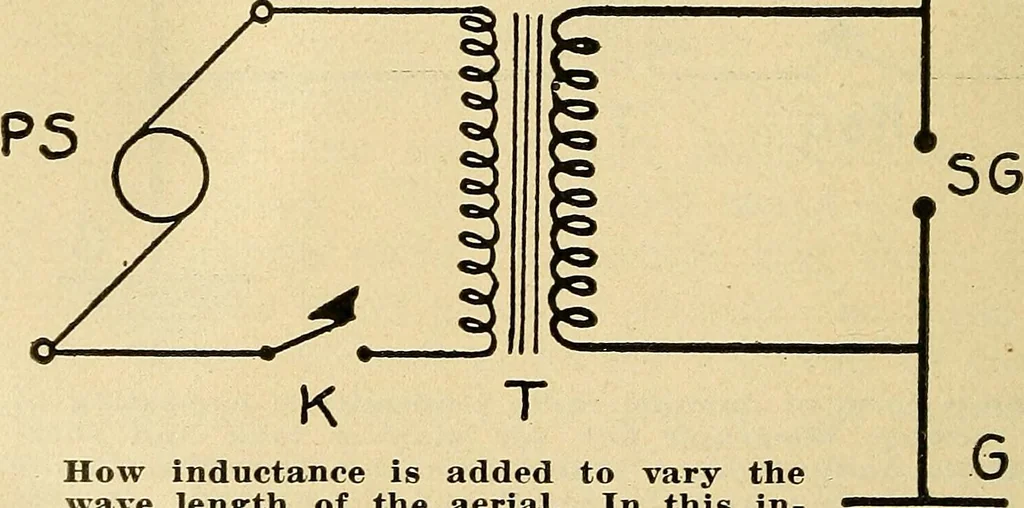
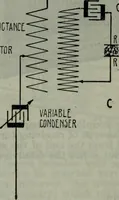
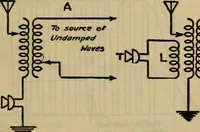
e charge. When the charge reachesa certain point it can no longer be contained in the aerial-ground condenser, and consequently it dis-charges across the spark gap, setting uposcillations in the aerial circuit. Simple as such a system may be, it ishardly permissible in general practice for the… … How inductance is added to vary thewave lengrth of the aerial. In this in-stance the same apparatus as shownon page 209 is employed, but a tuninginductance, known as an aerial induc-tance or loading coil, is added. of the days before the present radio laws, when it waspossible with even a one-inch…
Radio
Internet Archive · Boston College Libraries · Public Domain Mark 1.0. Free to use for anything.