Radio for everybody; being a popular guide to practical radio-phone reception and transmission and to the dot-and-dash reception and transmission of the radio telegraph, for the layman who wants to apply radio for his pleasure and profit without going into the special theories and the intricacies of the art (1922)
Lescarboura, Austin C. (Austin Celestin), 1891- · New York, Scientific American publishing company [etc.] · leaf 262
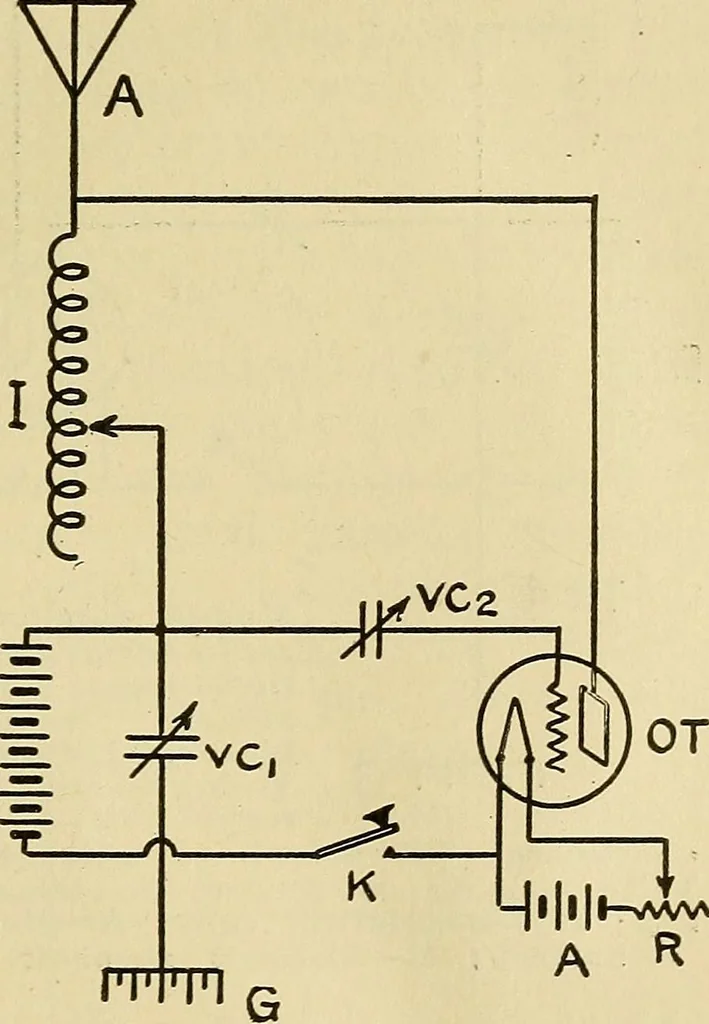
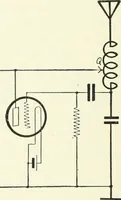
e aredealing with lowpower. Two 5-watttubes in parallel willput from one andone-quarter to oneand three-quarter am-peres in the amateursaerial. Using one ofthese tubes as a mod-ulator and the otheras an oscillator, forexperimental radiotelephony, distancesup to 40 miles can becovered, and at least… … Hlllll-VSAWA ^ A simple continuous wave telegraphtransmitter, making: use of a single5-watt tube. This set transmitsstraight CW. A—aerial; I—aerial in-ductance; B—high voltage battery;VCl—variable condenser; G—ground;K—telegraph key; VC2—grid conden-ser; OT—oscillating tube; A—filamentbattery;…
Radio
Internet Archive · Boston College Libraries · Public Domain Mark 1.0. Free to use for anything.