A short course in astronomy and the use of the globes (1871)
Kiddle, Henry, 1824-1891 · New York, Chicago, Ivison, Blakeman, Taylor & co. · leaf 112
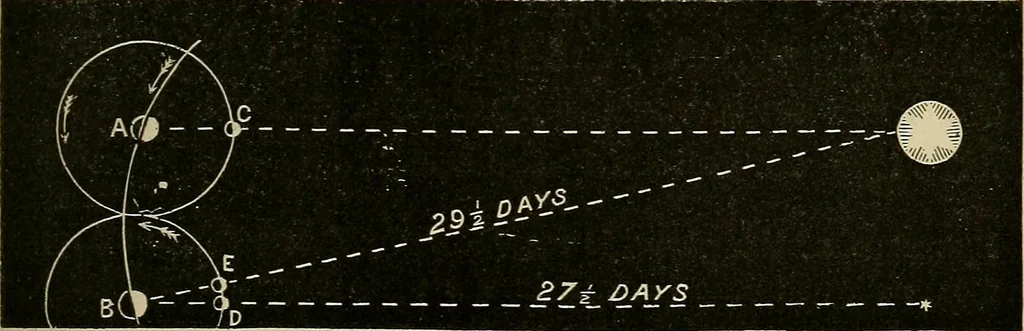
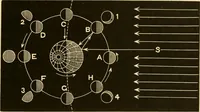
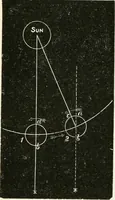
e moon by observing the phases. If the earth wereat rest, the time from one new or full moon to the nextwould be exactly the period of a revolution; but as theearth is constantly advancing in her orbit, when themoon has completed a revolution, she has to move stillfarther in order to come into the… … In the figure, let A B represent the advance of the earth in itsorbit, while the moon completes a synodic revolution, that is,moves from C, the position of inferior conjunction, till she arrivesat the same relative position with the sun at E. But when shereaches this point, she has completed a…
Astronomy
Internet Archive · Library of Congress · Public Domain Mark 1.0. Free to use for anything.