A text-book of general astronomy : for colleges and scientific schools (1888)
Young, Charles A. (Charles Augustus), 1834-1908 · Boston ; London : Ginn & Company · leaf 23
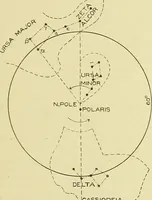
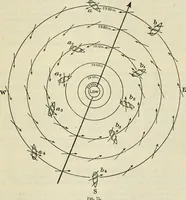
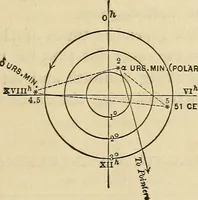
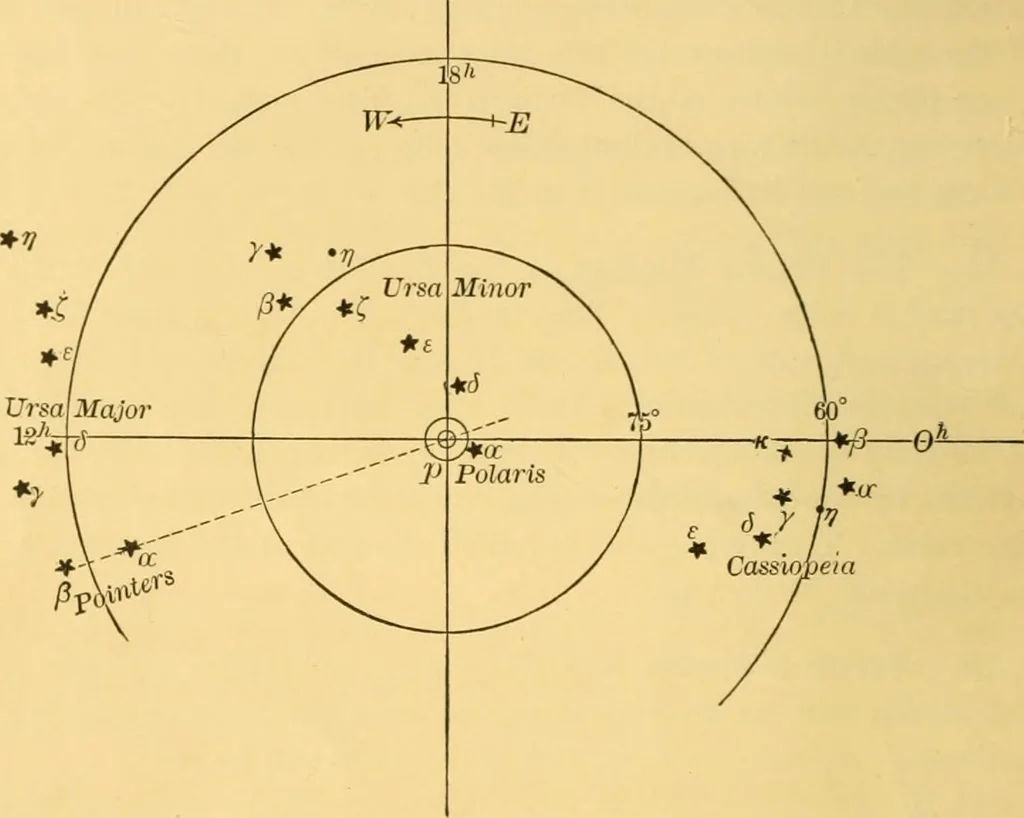
re, turning on itsaxis once a day. The path thus daily described by a star is called its diurnal circle. It is soon evident that in onr latitude the visible pole of thissphere — the point about which it turns — is in the north, not quitehalf-way up from the horizon to the zenith, for in that region… … Fig. 3. — The Pole Star and the Pointers. stars diurnal circle reduces to zero; i.e., points where, if a star wereplaced, it would suffer no apparent change of place during the wholetwenty-four hours. The line joining these poles is, of course, theaxis of the celestial sphere, about which it seems…
Astronomy
Internet Archive · Wellesley College Library · Public Domain Mark 1.0. Free to use for anything.
![An illustration from [Electric engineering.] (1902)](https://img.insideoutlibrary.com/img/200/ia-electricengineer02inte-520-293.webp)