The textile industries : a practical guide to fibres, yarns & fabrics in every branch of textile manufacture, including preparation of fibres, spinning, doubling, designing, weaving, bleaching, printing, dyeing and finishing (1910)
Murphy, William S · London : The Gresham Publishing Company · leaf 81
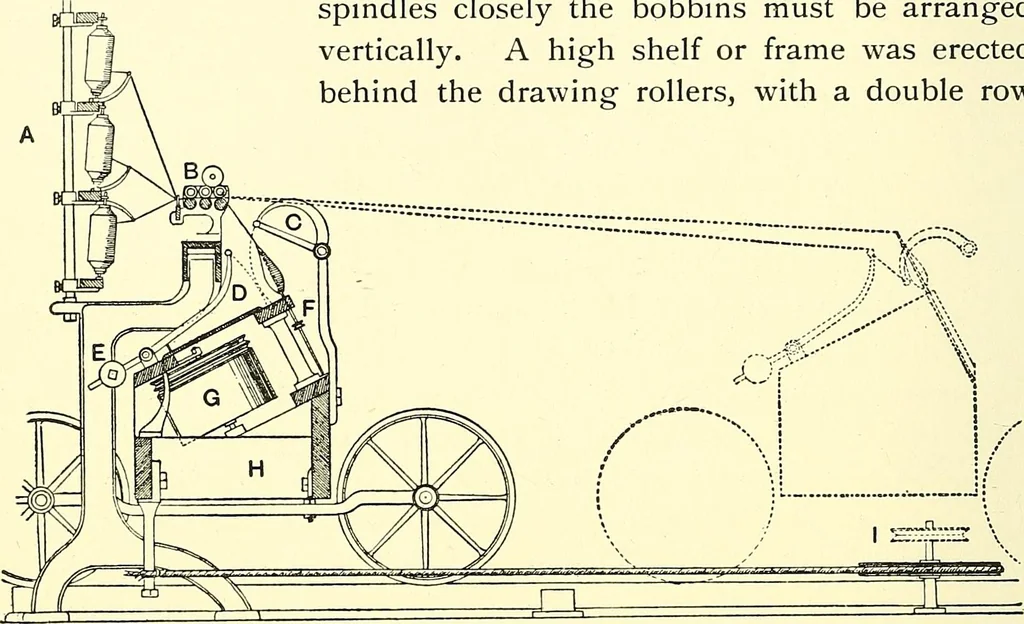
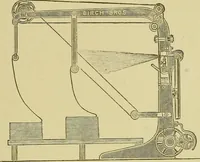
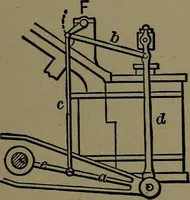
een in most of the factories operating in the year1820 (fig. 129). Four distinct mechanisms constitute this machine.These were: i, the creel; 2, the drawing mechanism; 3, the carriage;4, the headstock or driving machinery. I. The Creel.—The first form of creel held the roving bobbins ina horizontal… … Fig. 129.—The Mule of 1820. Section showing spinning parts A, Creel. b, Drawing rollers. c, Faller. D, Counter faller weighted at E. F, Spindle, with its wharve.G, Tin Cylinder, driving the spindles, and driven by an endless band running on the twist pulley, on the head-stock, and on the end pulley…
Textile industry · Textile fabrics
Internet Archive · UMass Dartmouth, Claire T. Carney Library · Public Domain Mark 1.0. Free to use for anything.