Textile raw materials and their conversion into yarns : (the study of the raw materials and the technology of the spinning process) a text-book for textile, trade and higher technical schools, as also for self-instruction ; based upon the ordinary syllabus and curriculum of the Imperial and Royal Austrian weaving schools (1901)
Zipser, Julius, Salter, Charles · London : Scott, Greenwood · leaf 20
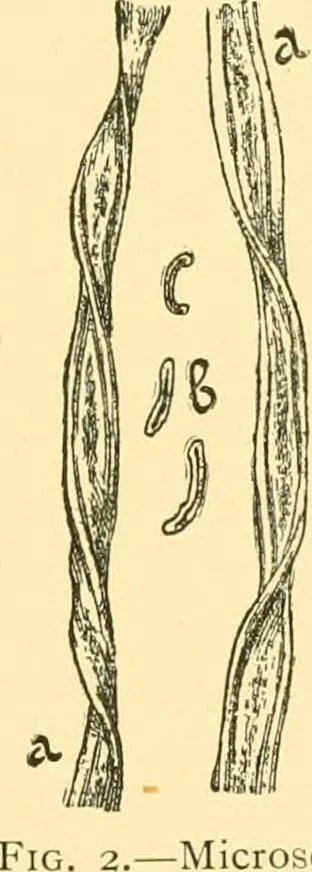
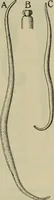
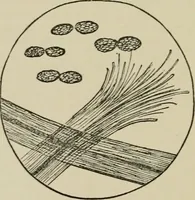
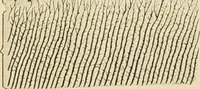
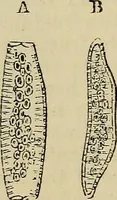
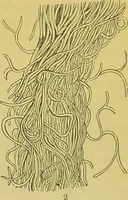
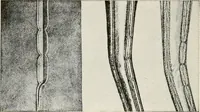
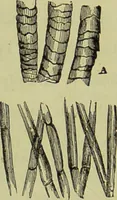
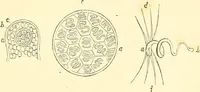
ation of cottonin Australasia (South Sea Islands) hasmade considerable strides. The Microscopic Structure and Propertiesof Cotton.I. Microscopic Structure.—Under themicroscope the cotton fibre a (Fig. 2)appears as an isolated flattened tubularvegetable cell with thickened edges, thewhole being… … .—MicroscopicStructure of Cottonor lattice-like Fibre: a, Front View;b. Cross Sections. 14 TEXTILE RAW MATERIALS. fine cuticle, probably cellulose modified by light and air;b represents cross sections of different cotton fibres curledround in the form of a trough. N.B.—If the microscope reveals…
Textile fibers · Spinning
Internet Archive · UMass Dartmouth, Claire T. Carney Library · Public Domain Mark 1.0. Free to use for anything.