Textile raw materials and their conversion into yarns : (the study of the raw materials and the technology of the spinning process) a text-book for textile, trade and higher technical schools, as also for self-instruction ; based upon the ordinary syllabus and curriculum of the Imperial and Royal Austrian weaving schools (1901)
Zipser, Julius, Salter, Charles · London : Scott, Greenwood · leaf 454
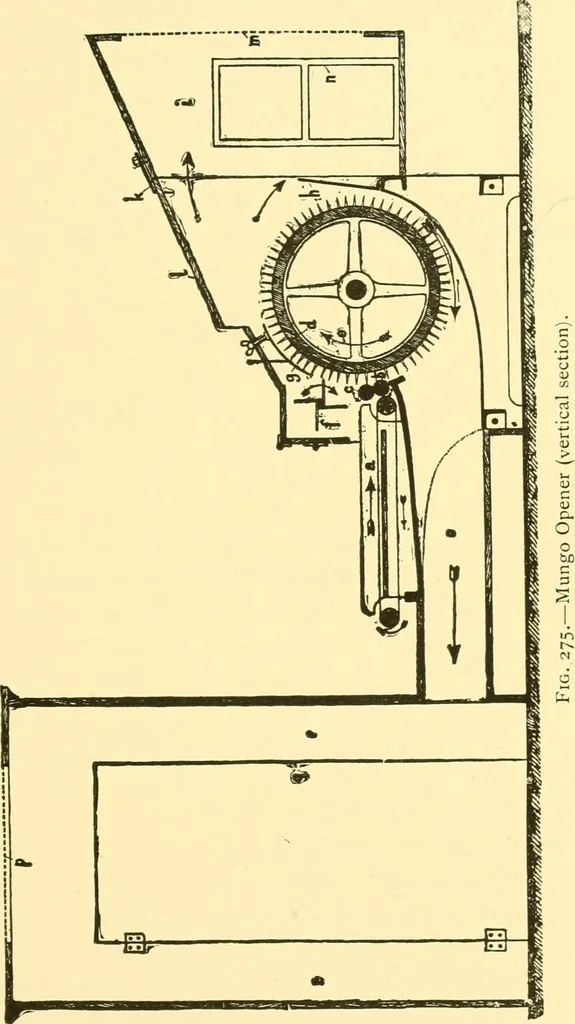
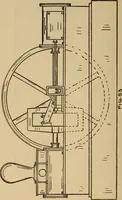
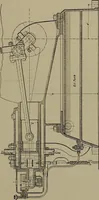
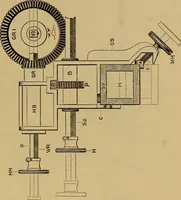
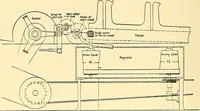
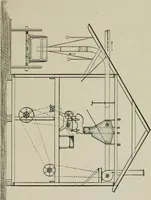
ard mungo rags havinga larger number of teeth in the cylinder than the one used onthe softer shoddy rags. The rags are spread out by hand in a thin layer on thefeed creeper, a, care being taken in the case of mungo thateither the warp or the weft threads are laid parallel to the axisof the… … teeth of pointed steel. For very short rags a dish-feeding 448 TEXTILE RAW MATERIALS. arrangement has lately been introduced. The working breadthof the machine is comparatively narrow (about 20 inches).The toothed cylinder carries away the torn-off fibres andfragments of rag, the larger pieces…
Textile fibers · Spinning
Internet Archive · UMass Dartmouth, Claire T. Carney Library · Public Domain Mark 1.0. Free to use for anything.