Textile raw materials and their conversion into yarns : (the study of the raw materials and the technology of the spinning process) a text-book for textile, trade and higher technical schools, as also for self-instruction ; based upon the ordinary syllabus and curriculum of the Imperial and Royal Austrian weaving schools (1901)
Zipser, Julius, Salter, Charles · London : Scott, Greenwood · leaf 46
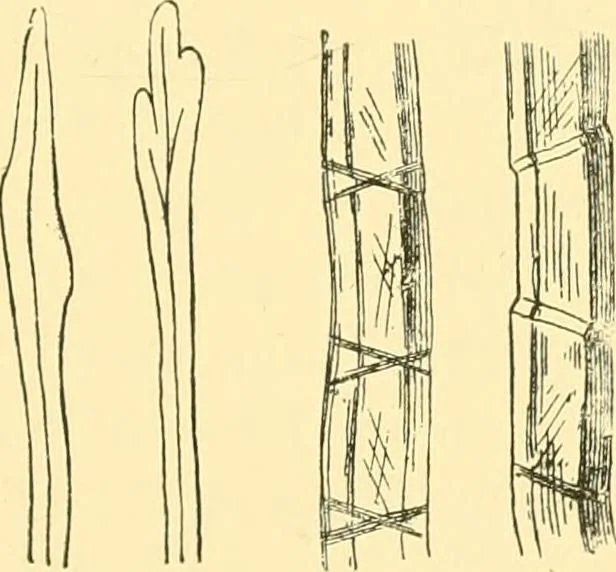
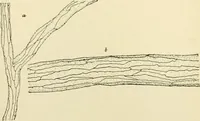
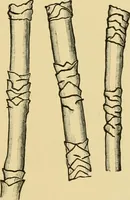
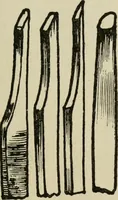
s fairly thick, and exhibits node-like excrescencesand displacements, as well as longitudinal fissures and cracks.The lumen is somewhat broader than in flax cells. Chemically considered, hemp fibre is usually a mixture ofcellulose and bastose. Properties, {a) Colour.—Hemp is whitish, silver or… … Fig. -Microscopic Structure of the Hemp Fibre (front view). (c) The fineness depends on the quality of the hemp, butis generally lower than that of flax. {d) Tensile strength very considerable, and appreciablygreater than that of flax. {e) Lustre.—The best hemps have a silky gloss nearlyequal to…
Textile fibers · Spinning
Internet Archive · UMass Dartmouth, Claire T. Carney Library · Public Domain Mark 1.0. Free to use for anything.