Textile raw materials and their conversion into yarns : (the study of the raw materials and the technology of the spinning process) a text-book for textile, trade and higher technical schools, as also for self-instruction ; based upon the ordinary syllabus and curriculum of the Imperial and Royal Austrian weaving schools (1901)
Zipser, Julius, Salter, Charles · London : Scott, Greenwood · leaf 78
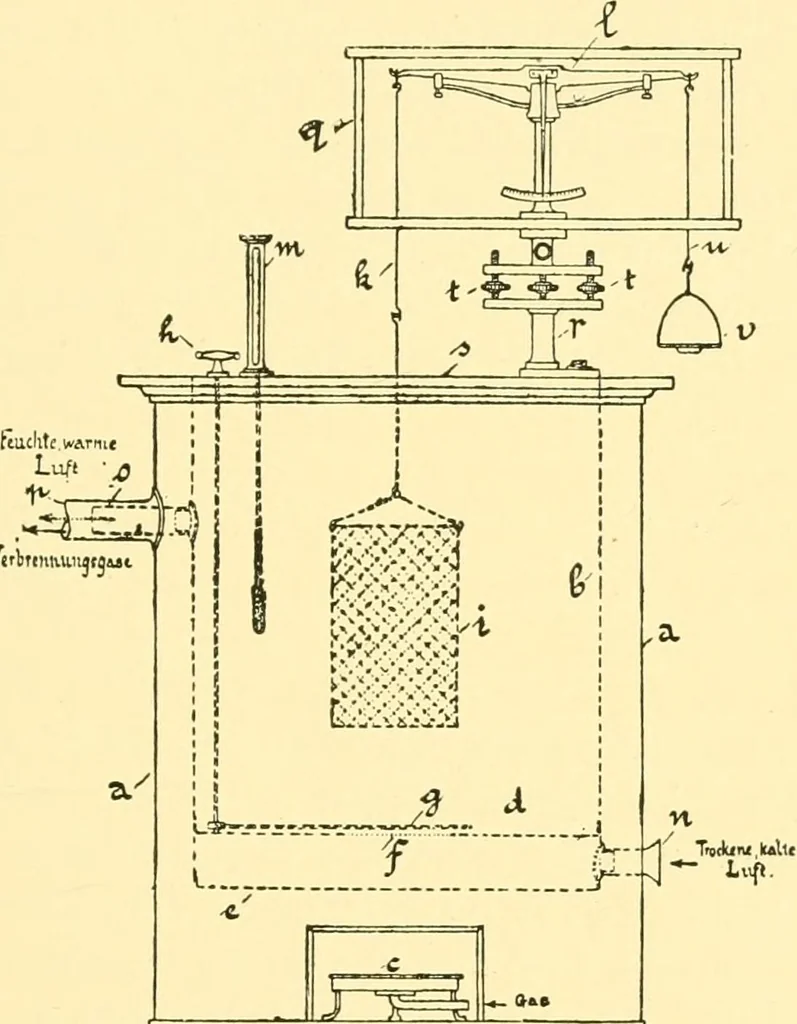
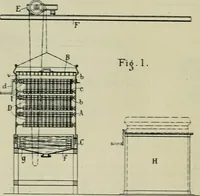
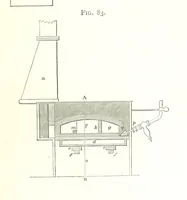
r, ui, and regulated by the flap, g. Cold dryair enters through the neck, n, at the right-hand side of themachine, the warm damp air being discharged through the TEXTILE RAW MATERIALS. 71 pipe, 0, which opens into the pipe, p, serving to lead away theproducts of combustion. The balance, t, enclosed… … (yjrbfemiu,iijfai Fig. 2g.—Wool-conditioning Apparatus (elevation). Fcuchte ivartne Ltift= Warm damp air. Vcrbreiuuingsgase = Products of combustion. Trockenekalte Liift = Cold dry air. Method of Conditioning Wool.—About 300 to 500 grammes(12 to 18 oz.) of the wool are taken as an average…
Textile fibers · Spinning
Internet Archive · UMass Dartmouth, Claire T. Carney Library · Public Domain Mark 1.0. Free to use for anything.
![An illustration from Essai de physique, par Mr. Pierre van Musschenbroek ... avec une description de nouvelles sortes de machines pneumatiques, et un recueil d'expériences par Mr. J. v[an] M[usschenbroek] Traduit du hollandois par Mr. Pierre Massuet .. (1751)](https://img.insideoutlibrary.com/img/200/ia-essaidephysiquep02muss-226-50.webp)