The wonders of the heavens, being a popular view of astronomy, including a full illustration of the mechanism of the heavens; embracing the sun, moon, and stars, with descriptions of the planets, comets, fixed stars, double stars, the constellations, the galaxy, or milky-way, the zodiacal light, aurora borealis, or norhtern lights, meteors, clouds, falling stars, aërolites, &c (1837)
Bradford, Duncan. [from old catalog] · Boston, American stationers company · leaf 120
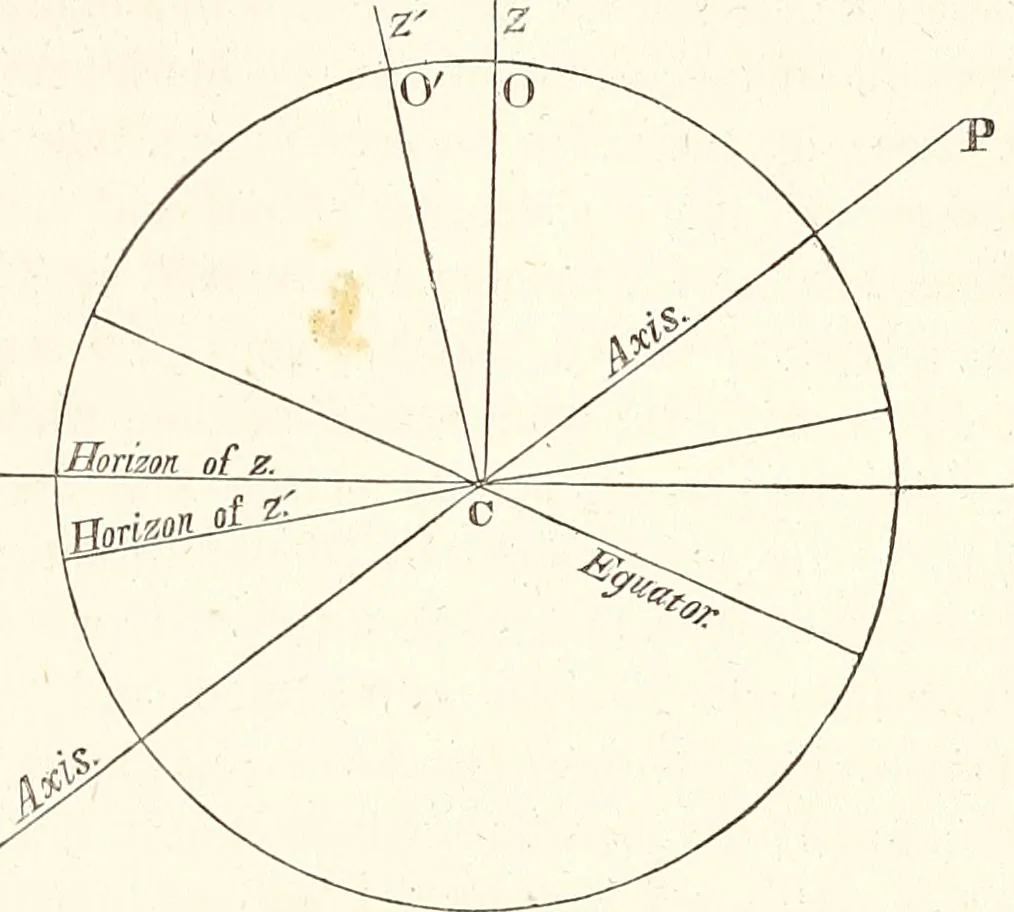
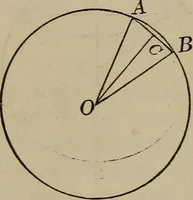
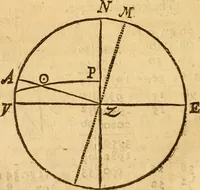
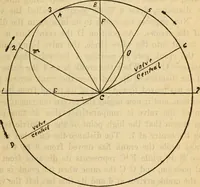
of the meridian of the first placewould form with that of the second an angle ofthirty degrees, and with that of the third an angle of forty-five degrees. The second place would bethirty degrees west of the first; the third would beforty-five degrees east of the first, and seventy-fiveeast of the… … observers, 0 and 0, under the same meridian, haveat their zeniths, Z and Z, stars whose distance fromthe pole differs one degree, the difference of theheights of the pole-star above the horizon, that is,the angle 0 C 0, will be also one degree. Let thedistance 0 0 be measured, and let similar…
Astronomy
Internet Archive · Library of Congress · Public Domain Mark 1.0. Free to use for anything.