The wonders of the heavens, being a popular view of astronomy, including a full illustration of the mechanism of the heavens; embracing the sun, moon, and stars, with descriptions of the planets, comets, fixed stars, double stars, the constellations, the galaxy, or milky-way, the zodiacal light, aurora borealis, or norhtern lights, meteors, clouds, falling stars, aërolites, &c (1837)
Bradford, Duncan. [from old catalog] · Boston, American stationers company · leaf 224
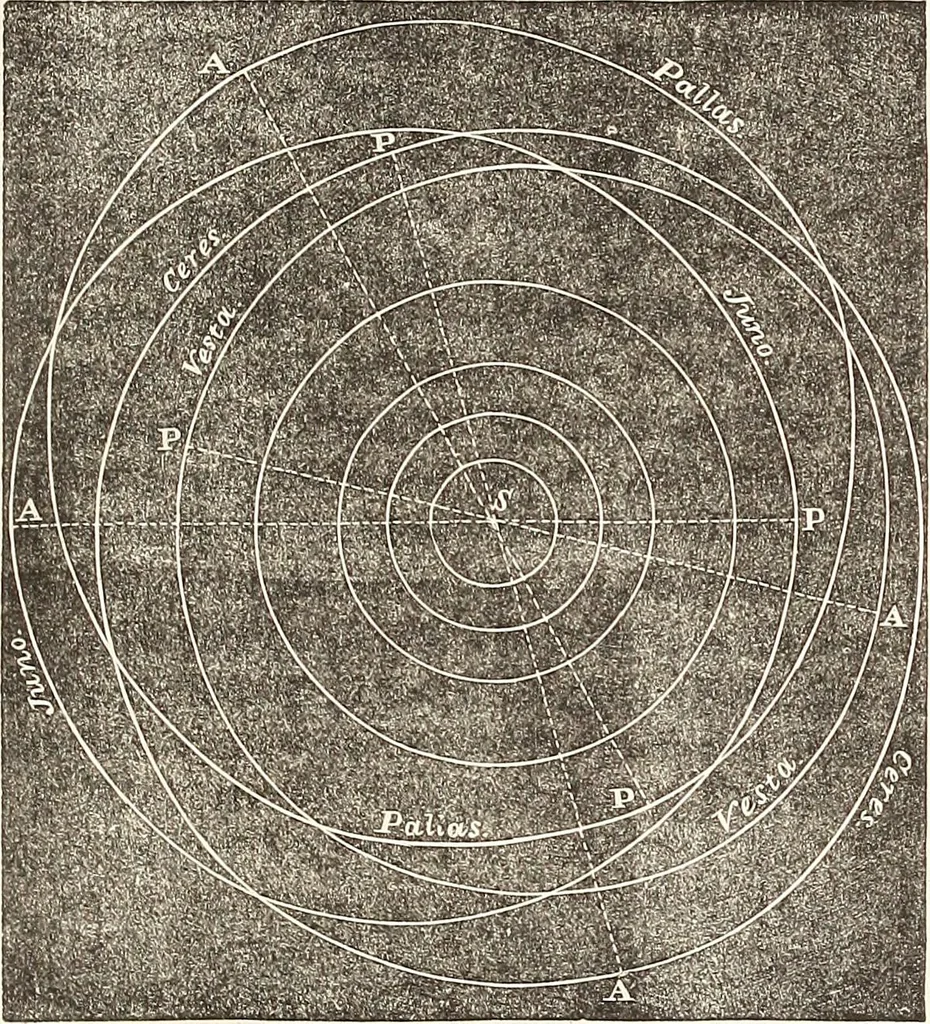
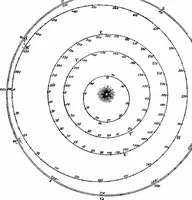
is WONDERS OF THE HEAVENS. 175 remarkable that its light is so intense that Schroetersaw it several times without the aid of an instru-ment. Vesta is two hundred and twenty-fivemillions of miles from the sun. It has been supposed that this planet had beenpreviously observed, and mistaken for a… … in the figure. These orbits appear to intersecteach other in various places, and it is obvious thatthe points of intersection must be perpetually shift-ing, according to the changes in the aphelia ofthe planets. SECTION III. Jupiters form—Its situation—Length of its year^Rapidity of rota-tion—Small…
Astronomy
Internet Archive · Library of Congress · Public Domain Mark 1.0. Free to use for anything.