The wonders of the heavens, being a popular view of astronomy, including a full illustration of the mechanism of the heavens; embracing the sun, moon, and stars, with descriptions of the planets, comets, fixed stars, double stars, the constellations, the galaxy, or milky-way, the zodiacal light, aurora borealis, or norhtern lights, meteors, clouds, falling stars, aërolites, &c (1837)
Bradford, Duncan. [from old catalog] · Boston, American stationers company · leaf 224
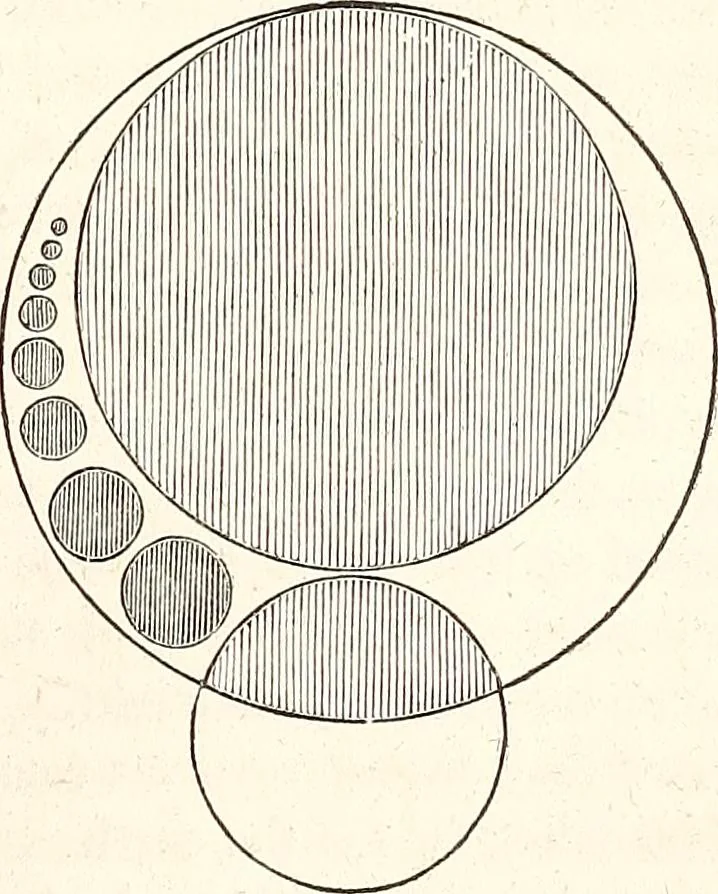
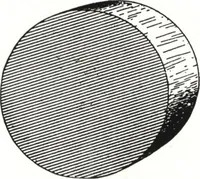
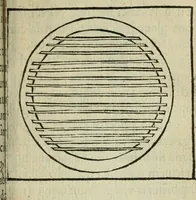
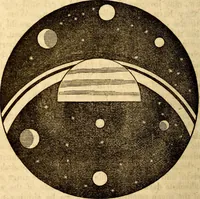
ma quick motion round an axis: and when the defi-ciency of weight or gravity of the particles is madeup by a sufficient accumulation, there is an equili-hrium, and the equatorial parts rise no higher.The ratio (fourteen to thirteen) was obtained fromobservations by Herschel, and it is a… … Jupiter, the largest of all the planets, is stillhigher in the system than Pallas, being about four 176 WONDERS OF THE HEAVENS hundred and ninety millions of miles from the sun,and, going at the rate of twenty-nine thousandmiles an hour in its orbit, completes its revolutionin a little less than…
Astronomy
Internet Archive · Library of Congress · Public Domain Mark 1.0. Free to use for anything.