The wonders of the heavens, being a popular view of astronomy, including a full illustration of the mechanism of the heavens; embracing the sun, moon, and stars, with descriptions of the planets, comets, fixed stars, double stars, the constellations, the galaxy, or milky-way, the zodiacal light, aurora borealis, or norhtern lights, meteors, clouds, falling stars, aërolites, &c (1837)
Bradford, Duncan. [from old catalog] · Boston, American stationers company · leaf 275
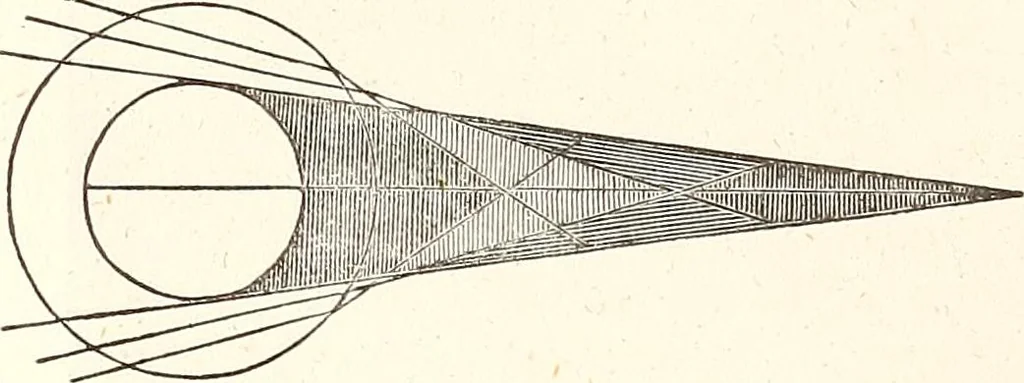
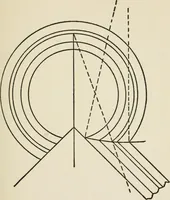
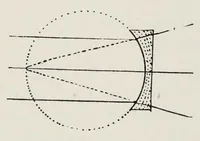
toprevent its reception of any light independently ofthis inflection of rays. If the light thus tending toa point behind the earth were not in a great degreeabsorbed by the atmosphere, its effect would bevery considerable; for, if we consider one of theluminous points of the suns disc, this point… … the obscured part of the moon is more or lessfaintly visible. The degree in which this takesplace depends much on the general state of theearths atmosphere at the time. The red rays,having the greatest momentum, are those whichprincipally find their way to the moon. Thus, inthe eclipse of September…
Astronomy
Internet Archive · Library of Congress · Public Domain Mark 1.0. Free to use for anything.