The wonders of the heavens, being a popular view of astronomy, including a full illustration of the mechanism of the heavens; embracing the sun, moon, and stars, with descriptions of the planets, comets, fixed stars, double stars, the constellations, the galaxy, or milky-way, the zodiacal light, aurora borealis, or norhtern lights, meteors, clouds, falling stars, aërolites, &c (1837)
Bradford, Duncan. [from old catalog] · Boston, American stationers company · leaf 391
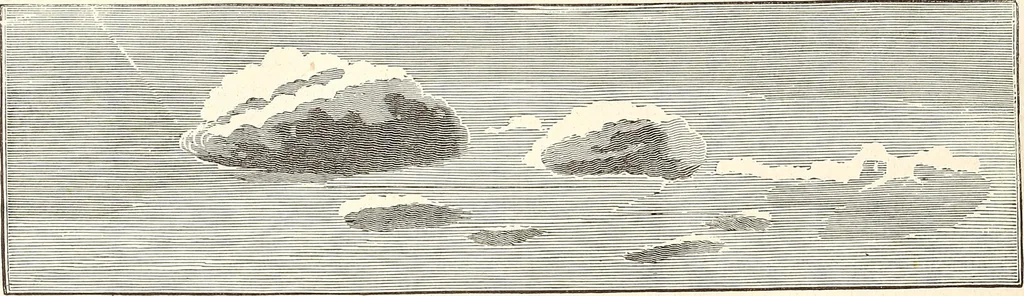
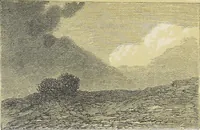
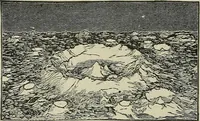
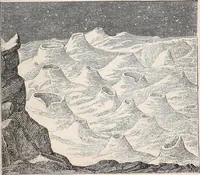
ed superstruc-ture ; hence its name cumulus, a heap or pile. It has usually a flattened base. The mode of its forma-tion is by the gathering together of detachedclouds, which then appear stacked into one largeand elevated mass, or stacken-cloud. The besttime for viewing its progressive formation is… … It maybe called the cloud of day, as it usually existsonly during that period, dissolving in the evening,in a manner the exact counterpart of its formationin the morning. Those stacken-clouds which areof a more regular hemispherical form, whitish-colored, and which reflect a strong silvery…
Astronomy
Internet Archive · Library of Congress · Public Domain Mark 1.0. Free to use for anything.