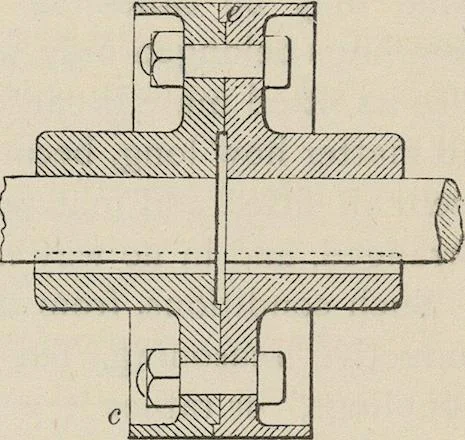
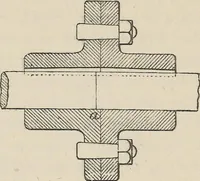
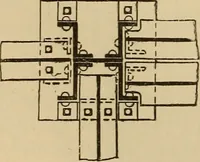
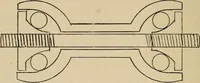
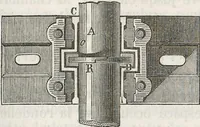
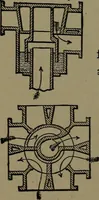
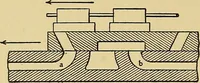
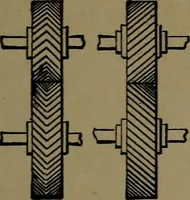
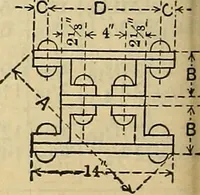
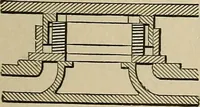
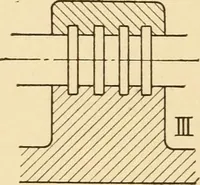
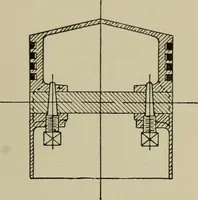
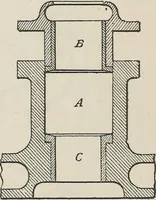
extent to which it lapped over the joint between the flanges . This last objection , which may for some reasons seem a trivial one , is nevertheless often a cause of much in - Fig . 768 . convenience . If a long shaft is to be dis - connected in the centre it not unfrequently happens that in Order… … Fig . 769 . was formed by a slight interlocking , as shown at e , in most cases not exceeding y % inch in depth , so that in disconnecting , it rarely happened that by straining a shaft its supports would not yield enough to allow a section to be taken out . The coupling flanges were usually keyed…
e-rara · Eisenbibliothek Schlatt · No known copyright restrictions. Free to use for anything.