The American house carpenter: a treatise upon architecture, cornices and mouldings, framing, doors, windows and stairs. Together with the most important principles of practical geometry (1852)
Hatfield, R. G. (Robert Griffith), 1815-1879 · New York, J. Wiley · leaf 224
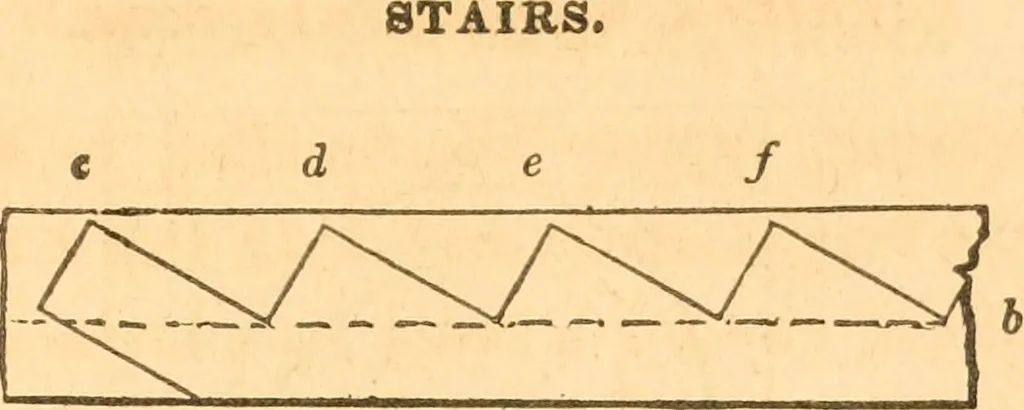
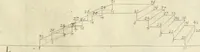
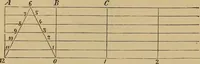
ual to the tread; mark along thoseedges with a knife, and cut it out by the marks, making the edgesperfectly square. The grain of the wood must run in the directionindicated in the figure, because, if it shrinks a trifle, the rise andthe tread will be equally affected by it. When a pitch-board… … 2ivr Fitr. 25(j. and plastering under the steps, is about 5 inches for ordinarystairs ; set a gauge, therefore, at 5 inches, and run it on the loweredge of the plank, as a 6, {Fig. 256.) Connnencing at one end,lay the longest side of the pitch-board against the gauge-mark, a6, as at c, and draw by…
Carpentry · Architecture
Internet Archive · Library of Congress · Public Domain Mark 1.0. Free to use for anything.