Appleton's dictionary of machines, mechanics, engine-work, and engineering (1861)
Appleton, firm, publishers, New York. (1852, D. Appleton & Co.) · New York : D. Appleton · leaf 695
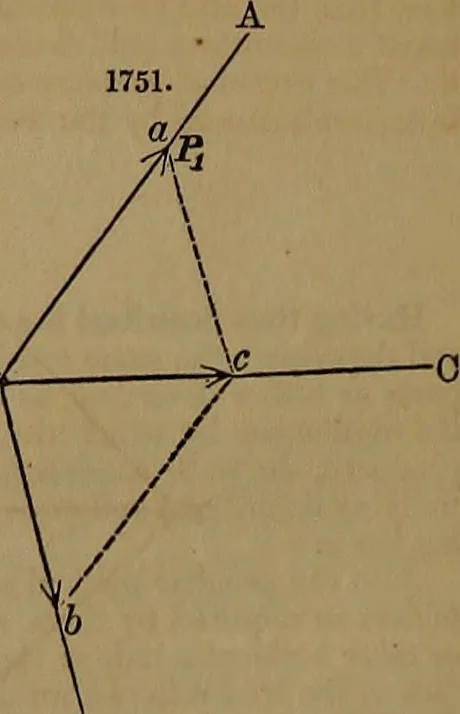
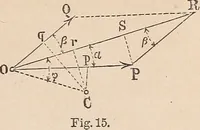
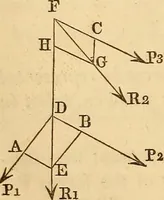
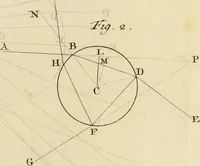
flength; and this force will produce upon the point P the same effect as the two forces P A and P Bproduce acting together. This method of finding an equivalent, or the. resultant of two forces, is called the parallelogram offorces, and is thus concisely expressed:— If two forces be represented, in… … FORCE. 685 Any number of forces, acting at one point, can be compounded by the same rule. For instance, letthe body x, Fig. 1*752, be pressed at once by the three forces whose directions are expressed by thearrows ABC, and their magnitudes by the lengths xa, xb,xc. We may first compound any two…
Mechanical engineering
Internet Archive · Smithsonian Libraries · Public Domain Mark 1.0. Free to use for anything.