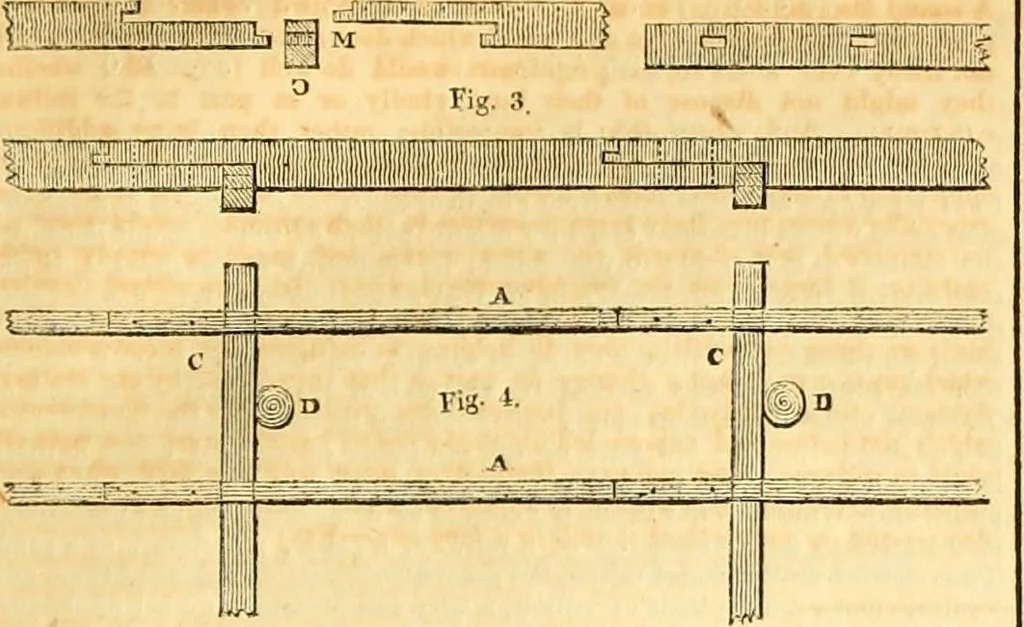
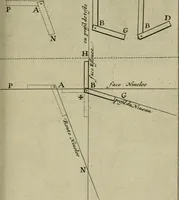
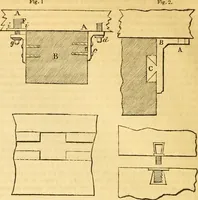
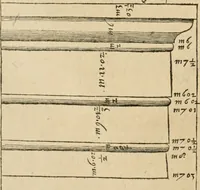
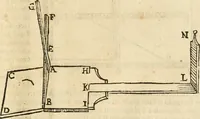
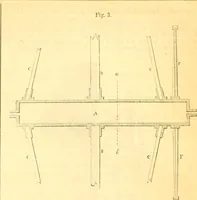
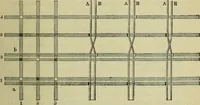
the timber on the edge ; because, in the first place,its stiffness is as the square of its depth—so that what is lost in a narrowerbearing surface, is more than counterbalanced by the stiffness of the timber;and, besides this, it enables me to form the joint in a more advantageousmanner. In cases… … The construction of the rail will he readily perceived by reference In theengraving. Fig. 1 is a side view of the end joints of the timbers, A and B ;the tongue of b enters the notch of a, and the two tenons, one in each timber,enter the mortice M of the cross tie c, and meet midway, forming a…
Civil engineering · Architecture
Internet Archive · Boston Library Consortium · Public Domain Mark 1.0. Free to use for anything.