Elements of analytical geometry and the differential and integral calculus (1856)
Robinson, Horatio N. (Horatio Nelson), 1806-1867 · Cincinnati : J. Ernst · leaf 27
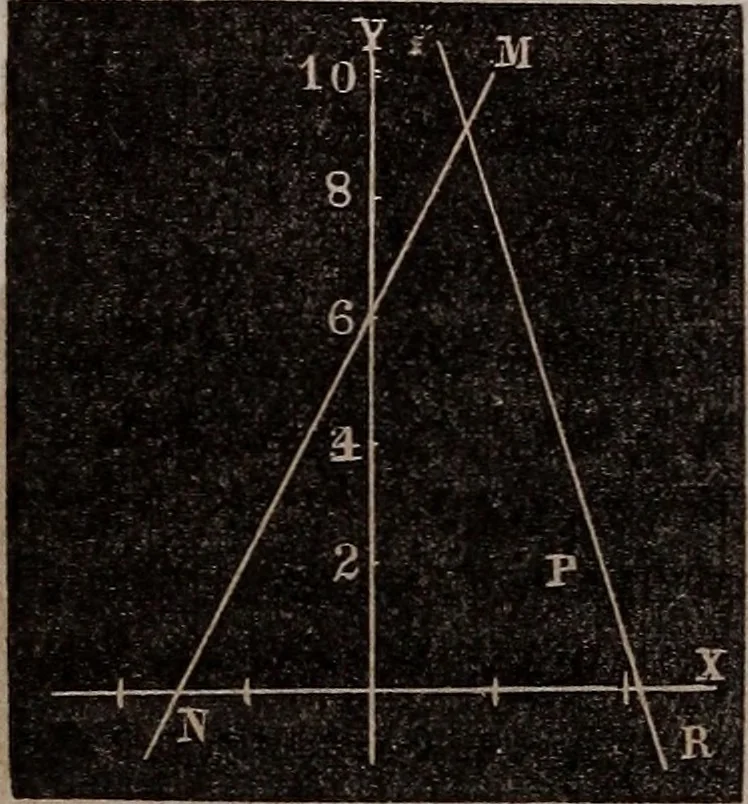
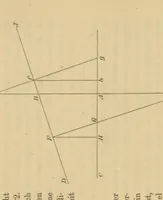
m its given co-or-dinates. Because the angle of intersectionis to be 45°, m=l, a=2. Substituting these values in (4) we havey~2=~3(x—3^).Or 7/=—3x-{-12i. Constructing the line MB correSj.onding with this equation,we perceive it must pass through F and make the angle iOfi?45°, as was required. The… … \-\-aaIn case the two lines are parallel m=0. Whence «=«, anobvious result. STRAIGHT LINES. 19 In case the two lines are perpendicular to each other, m mustbe infinite, and therefore we must put l-f-aa=0 to correspond with this hypothesis, and this gives aa result found in Cor. 1. To show the…
Geometry, Analytic · Calculus
Internet Archive · Library of Congress · Public Domain Mark 1.0. Free to use for anything.