The elements of natural philosophy : copiously illustrated by familiar experiments and containing descriptions of instruments, with directions for using : designed for the use of schools and academies (1856)
Sprague, A. W. (Alfred White), 1821-1891 · Boston : Phillips, Sampson & Company · leaf 299
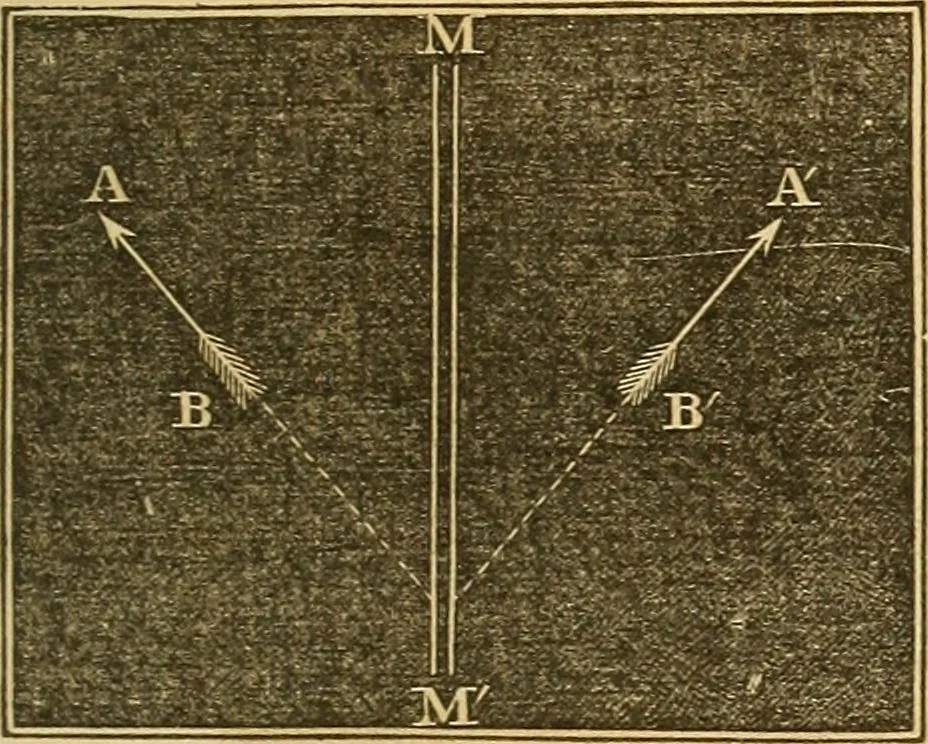
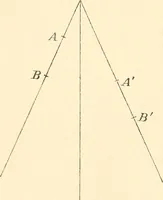
double that angle with its imaye.— Let A B be an * Mirrors are reflectors formed by coating the backs of polished glass platesvrith a brilliant amalgam of tin and quicksilver, while speculums are reflectorsmade from highly-polished metals. The latter aflord the more perfect reflect-ors, being used… … object inclined to the mirrorj M M, Fig. 232, and forming with it the angle B M M; thenwill the image A B be in-clined to the mirror at thesame angle, B M M; thesum of these angles, B MB, will be, therefore, theangle which the image makeswith the object, and doublethe angle which eithermakes with…
Physics
Internet Archive · Library of Congress · Public Domain Mark 1.0. Free to use for anything.