The elements of theoretical and descriptive astronomy, for the use of colleges and academies (1872)
White, Charles J. (Charles Joyce), 1839-1917 · Philadelphia, Claxton, Remsen & Haffelfinger · leaf 149
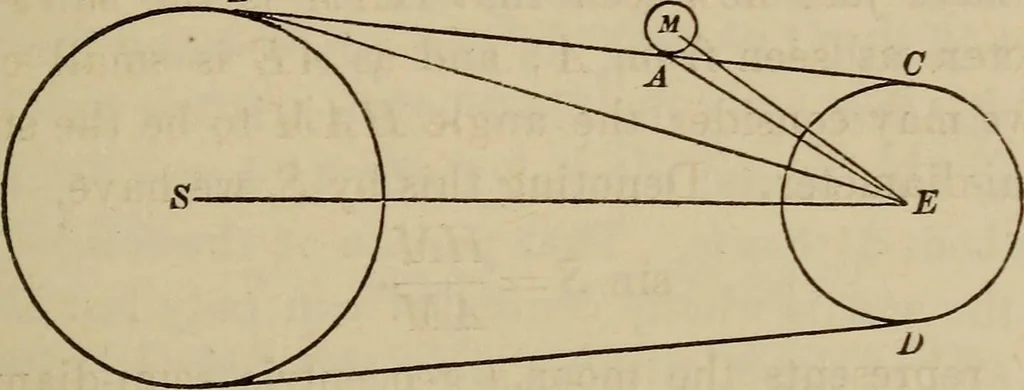
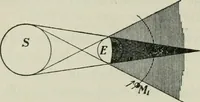
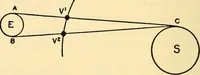
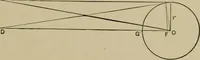
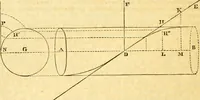
point where it touches. When the apex falls short ofthe surface, there will be no total eclipse; but at the point inwhich the axis of the cone, prolonged, meets the earth, the *OLAK ECLIPSE. 141 observer will see what is called an annular eclipse, the moonbeing projected upon the disc of the sun,… … G Fig. 60. and GD, drawn tangent to the sun and the earth: that is, unlessthe moons geocentric latitude is less, than the angle MES.Now we have, MES = MEA + AEB + BESfand, also, AEB= CAE— CBE. BES is the suns semi-diameter, 31EA that of the moon, CAE the moons horizontal parallax, and CBE the suns:…
Astronomy
Internet Archive · Library of Congress · Public Domain Mark 1.0. Free to use for anything.