The fundamental principles of Old and New World civilizations : a comparative research based on a study of the ancient Mexican religious, sociological and calendrical systems (1901)
Nuttall, Zelia, 1858-1933 · Cambridge, Mass. : Peabody Museum of American Archaeology and Ethnology · leaf 375
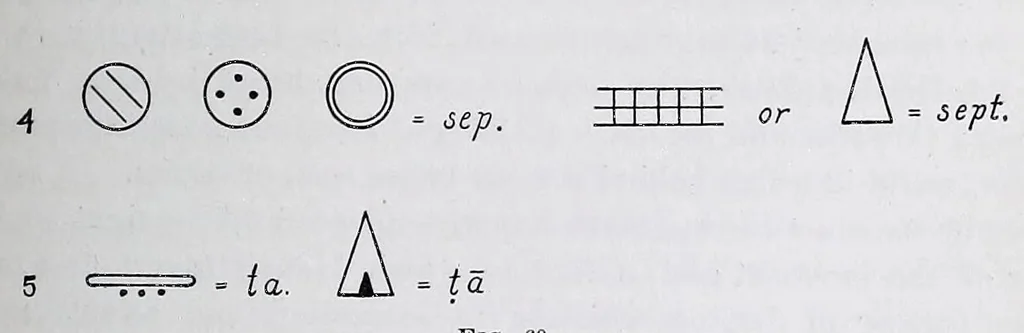
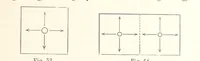
ky, which is likewise the determinative for city, that it contains four triangles. These converge towards the centre, as do the trian¬ gular sides of the square pyramid, and thus the sign nut and the pyramid clearly appear to express a whole divided into four parts, the square form being connected… … Fig. 60. ployed in ancient Egypt, is furnished by Dr. Wallis Budge’s state¬ ment that each nome or province was divided into four parts, and had its capital or “ nut. ” The inference is that each nome con¬ stituted a miniature reproduction of the state and that the sign nut represented its…
Civilization -- History · Mayas -- Antiquities · Calendar, Mexican · Mythology · Calendar · Swastikas
Internet Archive · Getty Research Institute · Public domain (published before 1931). Free to use for anything.