Leadless decorative tiles, faience, and mosaic, comprising notes and excerpts on the history, materials, manufacture & use of ornamental flooring tiles, ceramic mosaic, and decorative tiles and faience, with complete series of recipes for tile-bodies, and for leadless glazes and art-tile enamels (1904)
Furnival, W. J. (William James) · Stone, Staffordshire, W.J. Furnival · leaf 935
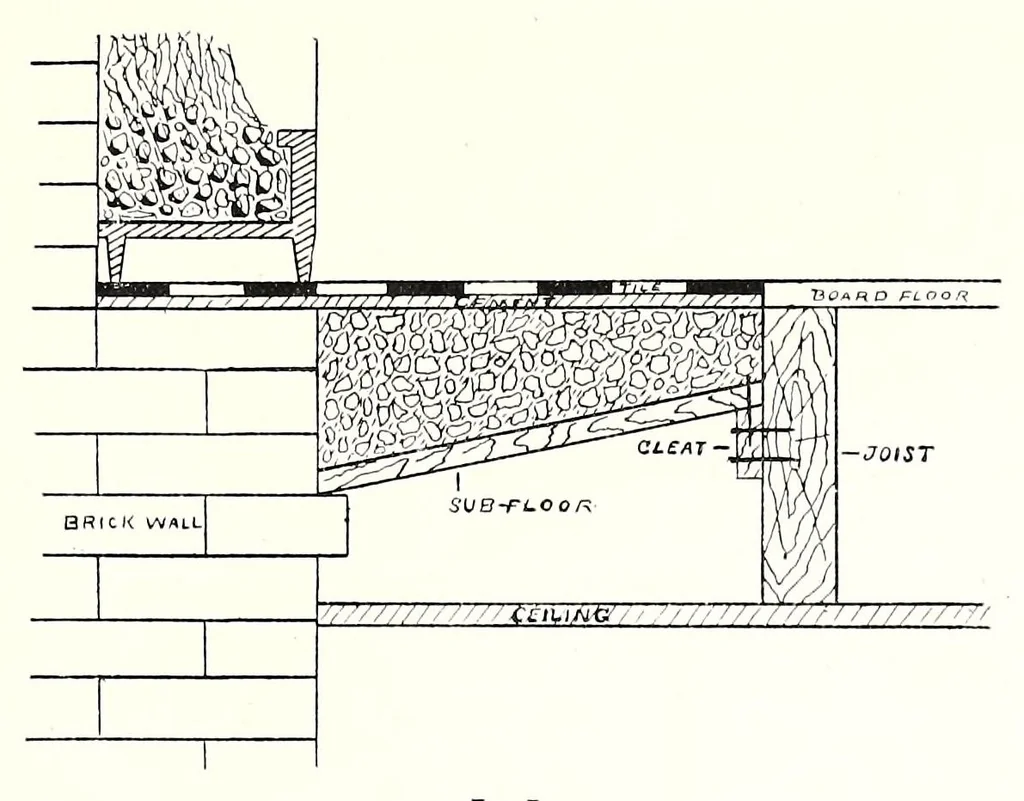
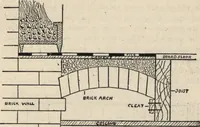
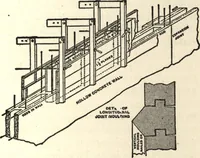
831 APPENDIX B The tops of iron beams should be from three to four inches below the FINISHED FLOOR LINE, TO PREVENT FLOORS WHEN FINISHED SHOWING LINES OF THE BEAMS. … Fig. 5. For Hearths. — The foundation for hearths should be placed upon a brick arch, if possible, to insure perfect fire protection, and then covered with concrete in the same manner as directed for tile-floors. If placed upon a sub-foundation of wood, the concreting should be at least 6 inches…
Pottery · Tiles · Mosaics · Enamel and enameling
Internet Archive · Getty Research Institute · Public domain (published before 1931). Free to use for anything.