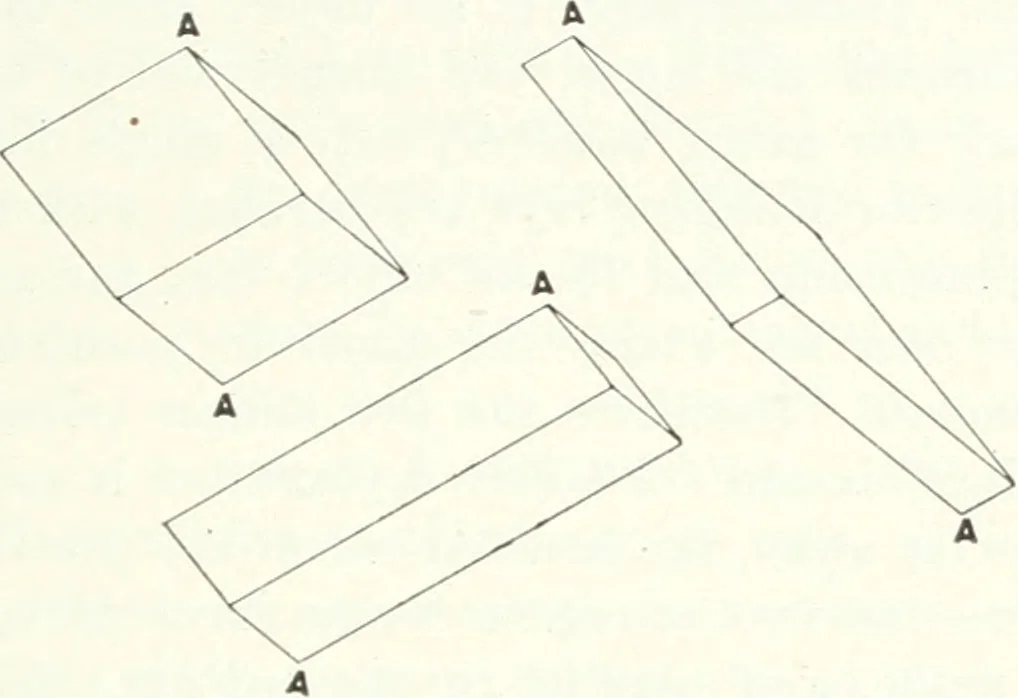
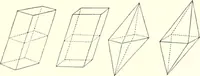
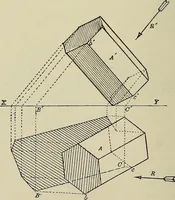
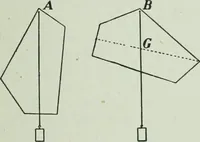
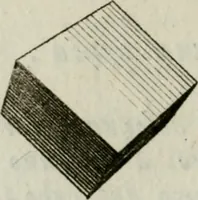
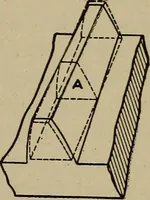
rhombohedral forms shown in the figure for cal-cite, each face bas two angles of 1**1 55 and two of 78° 5.In each rhombohedron, there are two opposite corners wherethree obtuse angles come together, as at A. A line drawn DOUBLE REFRACTION 207 through one of these corners, equally inclined to the… … Figure 104 When a pencil of light enters such a rhomb of calcite it isseparated into two parts, so that there are two refracted beams,instead of only one as in the case of glass and other non-crys-talline media. One of the beams obeys the ordinary laws ofrefraction, the ratio of the sines of the…
Light
Internet Archive · Gerstein Library, University of Toronto · Public Domain Mark 1.0. Free to use for anything.