Ball, W. W. Rouse (Walter William Rouse), 1850-1925 · London : Macmillan · leaf 65
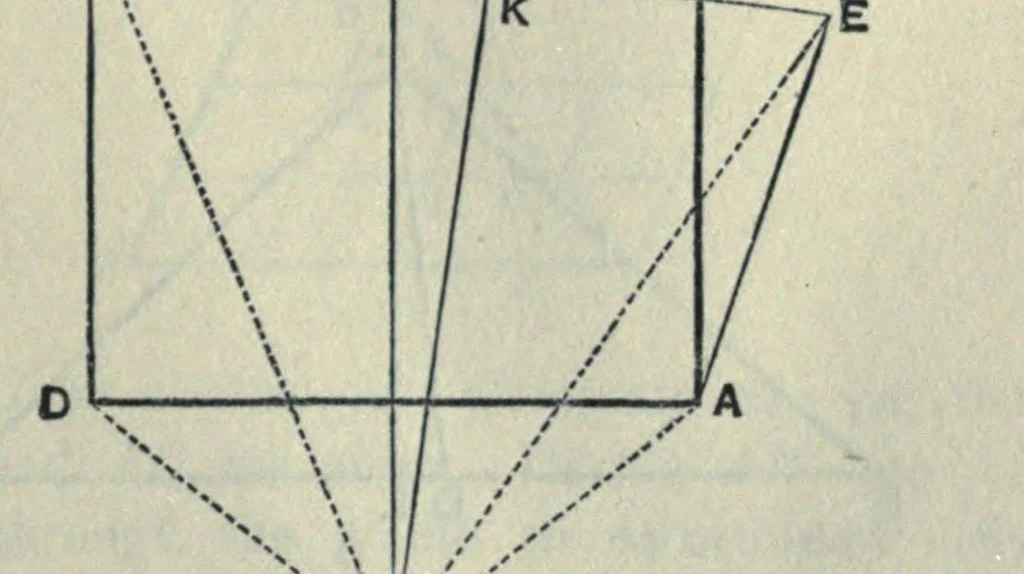
and is perpendicular to it, v^^e have the angle ODA equal to the angle OAD. Hence the angle ADG (which is the difference of ODG and ODA) is equal to the angle DAE (which is the difference of OAE and OAD). But ADG is a right angle, and DAE is necessarily greater than a right angle. Thus the result… … acute, and that the angle A is greater than the angle G. From A draw AD making the angle BAD equal to the angle C, and cutting BG in D. From A draw AE perpendicular to BG. The triangles ABC, ABD are equiangular; hence, by Euc. VI.19, AABG : AABD = AG': AD\ Also the triangles ABG, ABD are of equal…