Mechanical movements, powers and devices; a treatise describing mechanical movements and devices used in constructive and operative machinery and the mechanical arts, being practically a mechanical dictionary, commencing with a rudimentary description of the early known mechanical powers and detailing the various motions, appliances and inventions used in the mechanical arts to the present time, including a chapter on straight line movements, by Gardner D. Hiscox (1914)
Hiscox, Gardner Dexter, 1822?-1908 · New York, The Norman W. Henley publishing co. · leaf 191
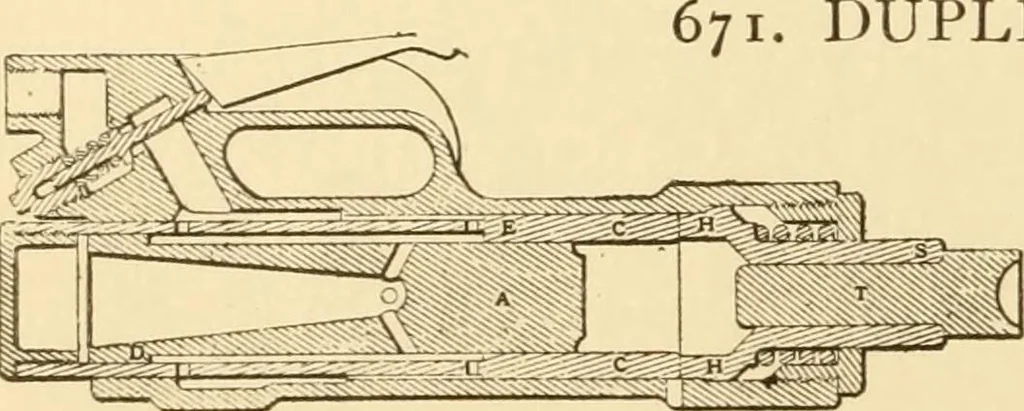
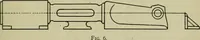
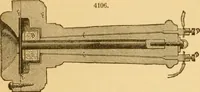
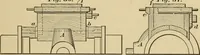
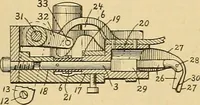
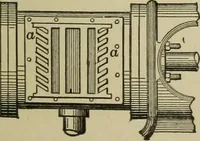
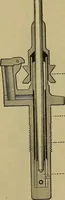
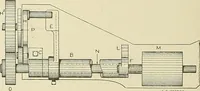
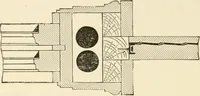
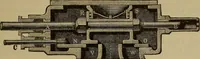
670. COMPRESSED AIR LIFT, Claytonmodel. Showing safety stop on the piston rod,which automatically stops the lift at any set pointby closing the air valve. … cylinder, C, on the tool socket, H.by the differential piston areas,this operation. DUPLEX PNEUMATIC RIVETER. — The striking piston. A, is en-cased in a striking cylinder, C,so that the tool, T, receives ablow alternately from the ham-mer piston, A, and from theThe method of operation is shownThe…
Mechanical movements
Internet Archive · Library of Congress · Public Domain Mark 1.0. Free to use for anything.