Mechanical movements, powers and devices; a treatise describing mechanical movements and devices used in constructive and operative machinery and the mechanical arts, being practically a mechanical dictionary, commencing with a rudimentary description of the early known mechanical powers and detailing the various motions, appliances and inventions used in the mechanical arts to the present time, including a chapter on straight line movements, by Gardner D. Hiscox (1914)
Hiscox, Gardner Dexter, 1822?-1908 · New York, The Norman W. Henley publishing co. · leaf 204
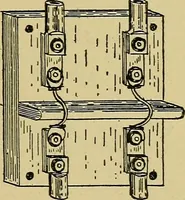
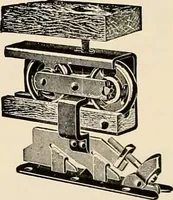
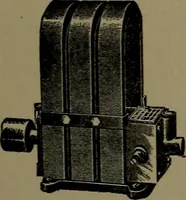
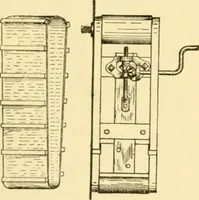
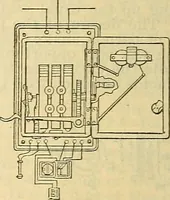
I. CAR TRUCK MOTORS. — Direct - connected electricmotors on street-car axles. ELECTRIC POWER AND CONSTRUCTION. i93 … 722. ELECTRIC FUSIBLE CUT-OUT.—Thefuse wires or strips are connected to the circuit oninsulated porcelain blocks. They are made of resist-ing metal or alloy of tin and lead of sufficient capacit}for the required current without excessive heat.Overcurrent melts the wire or strips and opens…
Mechanical movements
Internet Archive · Library of Congress · Public Domain Mark 1.0. Free to use for anything.
![An illustration from [Electric engineering.] (1902)](https://img.insideoutlibrary.com/img/200/ia-electricengineer03inte-650-390.webp)