Mechanical movements, powers and devices; a treatise describing mechanical movements and devices used in constructive and operative machinery and the mechanical arts, being practically a mechanical dictionary, commencing with a rudimentary description of the early known mechanical powers and detailing the various motions, appliances and inventions used in the mechanical arts to the present time, including a chapter on straight line movements, by Gardner D. Hiscox (1914)
Hiscox, Gardner Dexter, 1822?-1908 · New York, The Norman W. Henley publishing co. · leaf 243
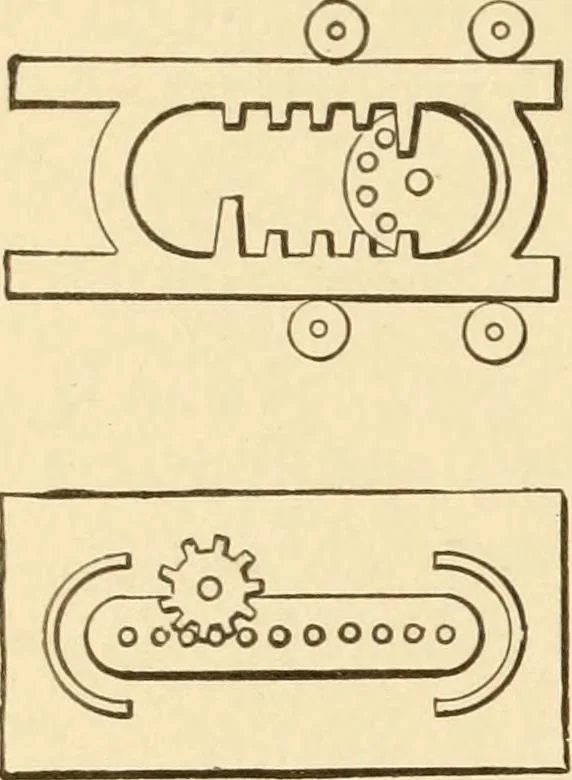
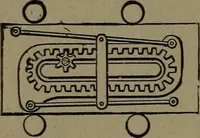
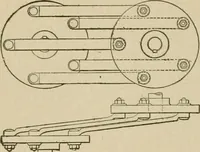
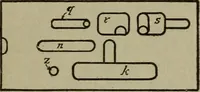
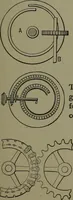
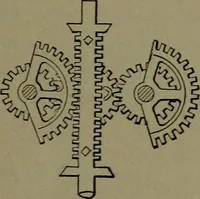
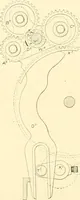
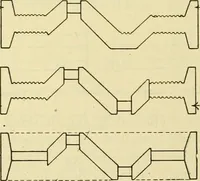
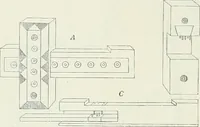
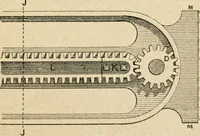
ing an endless rack.A mangle device. The pinion shaft moves upand down the slot, guiding the pinion aroundthe end of the rack. 232 GEARING. … 898. MANGLE RACK, guided by rollersand driven by a lantern half-pinion. The longteeth in the rack act as guides to insure atooth mesh at the end of each motion. 899. MANGLE RACK.—A reciprocating mo-tion of a frame to which is attached a pin-toothrack, the pinion being guided by the shaft rid-ing m…
Mechanical movements
Internet Archive · Library of Congress · Public Domain Mark 1.0. Free to use for anything.