Mechanical movements, powers and devices; a treatise describing mechanical movements and devices used in constructive and operative machinery and the mechanical arts, being practically a mechanical dictionary, commencing with a rudimentary description of the early known mechanical powers and detailing the various motions, appliances and inventions used in the mechanical arts to the present time, including a chapter on straight line movements, by Gardner D. Hiscox (1914)
Hiscox, Gardner Dexter, 1822?-1908 · New York, The Norman W. Henley publishing co. · leaf 306
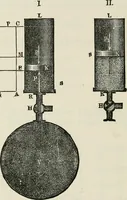
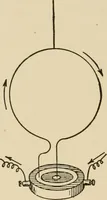
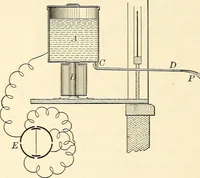
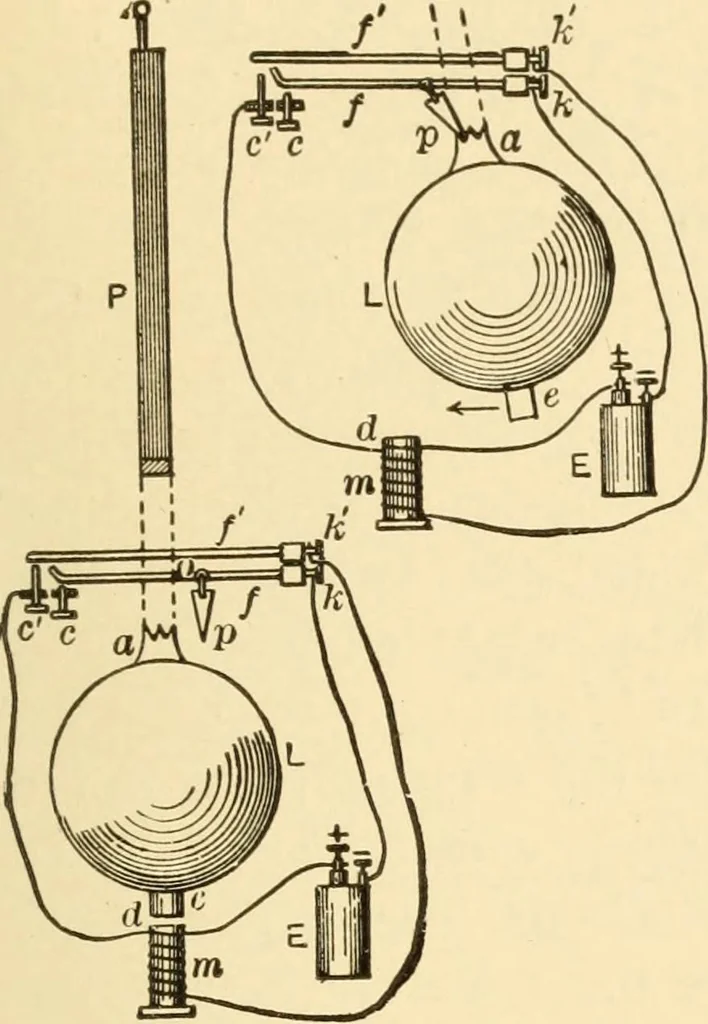
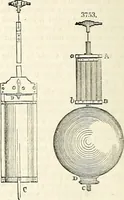
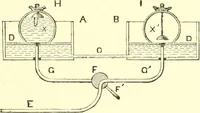
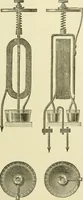
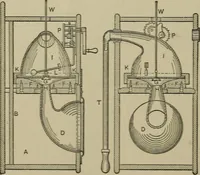
1194c. COMPENSATING PENDULUM.—The heavy black lines represent steel rods; the openlines the brass rods. The relative expansion of steelis 2, brass 3. The center rod is fixed to the lowercross head at the top and slides freely through thecross heads at the bottom. In the combinationshown the length… … 1194J. ELECTRO-MAGNETICCLOCK PENDULUM.—P is anordinary pendulum with a notchedpiece a and an iron piece e attached,m is an electro-magnet. E is a bat-tery ; f f are the springs which actas contact pieces attached to thebattery. /) is a steel piece called thepallet. As long as the pendulumis at its…
Mechanical movements
Internet Archive · Library of Congress · Public Domain Mark 1.0. Free to use for anything.
![An illustration from [Electric engineering.] (1902)](https://img.insideoutlibrary.com/img/200/ia-electricengineer03inte-375-236.webp)