Mechanical movements, powers and devices; a treatise describing mechanical movements and devices used in constructive and operative machinery and the mechanical arts, being practically a mechanical dictionary, commencing with a rudimentary description of the early known mechanical powers and detailing the various motions, appliances and inventions used in the mechanical arts to the present time, including a chapter on straight line movements, by Gardner D. Hiscox (1914)
Hiscox, Gardner Dexter, 1822?-1908 · New York, The Norman W. Henley publishing co. · leaf 342
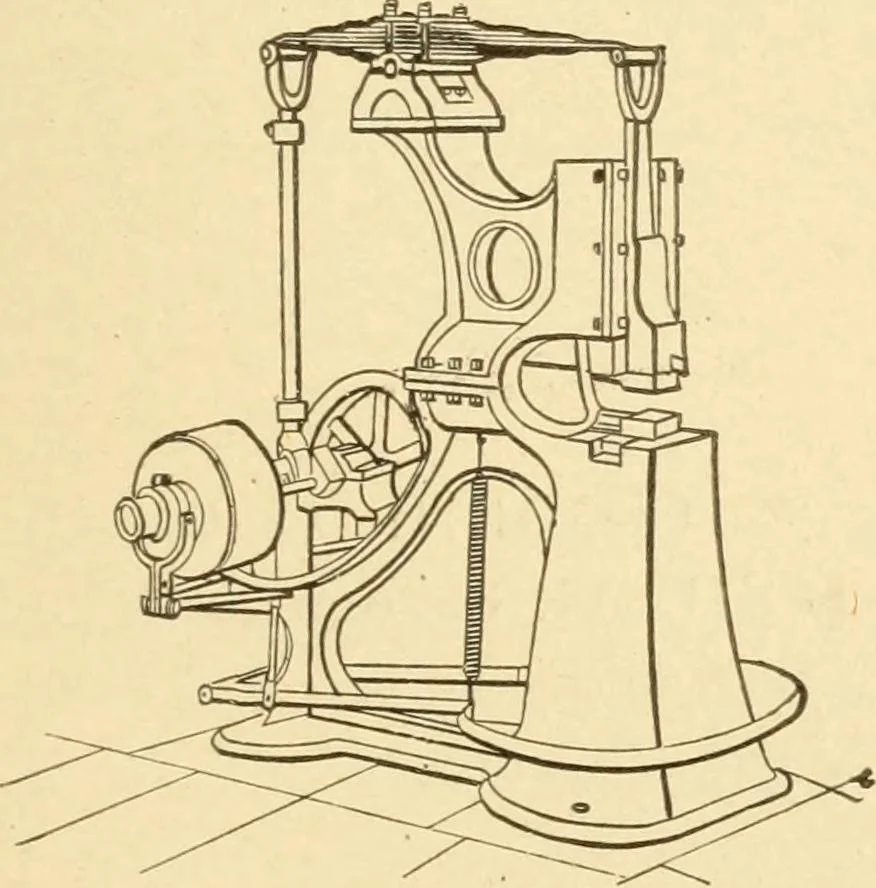
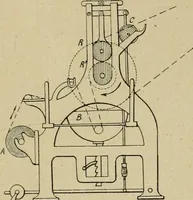
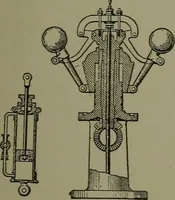
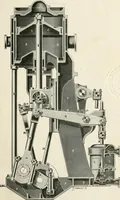
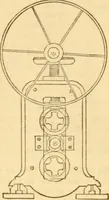
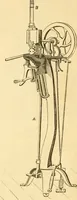
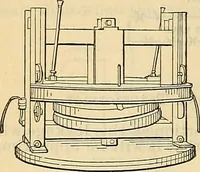
1366. BEAM TRIP HAMMER. —The beam is vibrated by an ec-centric on the driving shaft. Thecushions intensify and regulate theblow of the hammer. The treadleoperates the brake and controls theblow of the hammer. Bradleypattern. … 1367. SPRING HAMMER.—The height of the hammer, to suit the sizeof the forging, is adjusted by chang-ing the length of the connecting rod.The treadle controls the stroke byoperating a friction gear on the driv-ing pulley.
Mechanical movements
Internet Archive · Library of Congress · Public Domain Mark 1.0. Free to use for anything.