Mechanical movements, powers and devices; a treatise describing mechanical movements and devices used in constructive and operative machinery and the mechanical arts, being practically a mechanical dictionary, commencing with a rudimentary description of the early known mechanical powers and detailing the various motions, appliances and inventions used in the mechanical arts to the present time, including a chapter on straight line movements, by Gardner D. Hiscox (1914)
Hiscox, Gardner Dexter, 1822?-1908 · New York, The Norman W. Henley publishing co. · leaf 370
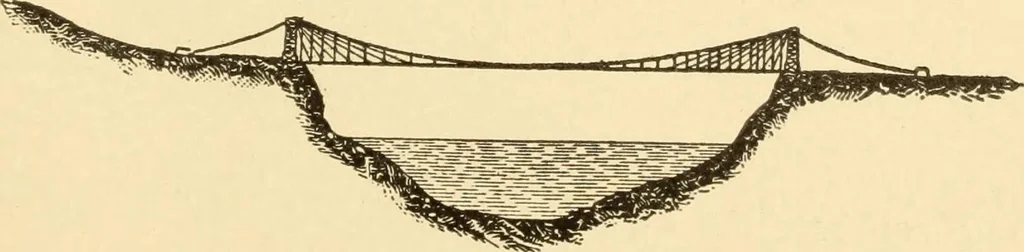
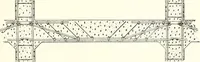
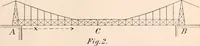
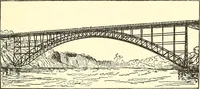
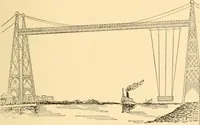
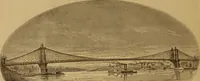
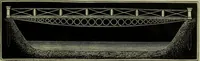
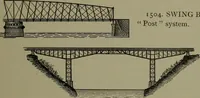
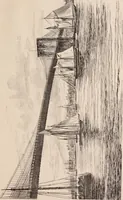
1508. SUSPENSION BRIDGE.—The Cincinnati bridge,Roebling system. Ten hundred and fifty-seven feet between piers. … 1509. SUSPENSION BRIDGE.—Niagara upper bridge, Roeb-ling system. Twelve hundred and fifty feet between piers. 36o CONSTRUCTION AND DEVICES. 15lo. SUSPENSION BRIDGE.—The New Yorkand Brooklyn bridge, Roebling system. Centre span,1,600 feet; land spans, each 920 feet; Brooklyn approach,998 feet; New…
Mechanical movements
Internet Archive · Library of Congress · Public Domain Mark 1.0. Free to use for anything.